Two dining tables can have the identical top, the same species, the same finish, and still live completely differently in a room. The difference is the base. Most people choose a top first and treat the base as an afterthought, then discover at the first dinner party that someone is straddling a leg.
This is a plain comparison of a trestle base and a four-leg base: who can sit where, how each one holds up over decades, and what each does to the look of the room. Both are good designs. They are good at different things.
The short version
- Four legs put a post at every corner, which is the most stable layout and works well in tight rooms, but it limits who can sit at the ends and corners.
- A trestle base moves the supports inboard, so the corners and ends are open and you can seat more people around the same top.
- Trestle tables tend to read heavier and more rustic; four-leg tables read lighter and can be as plain or as formal as you like.
- Both can be built rock solid. A well-made trestle needs a proper stretcher and joinery, and a four-leg table needs good aprons.
- For a household that hosts often, a trestle usually seats an extra person or two. For a small room, four legs usually wins.
How the two bases actually work
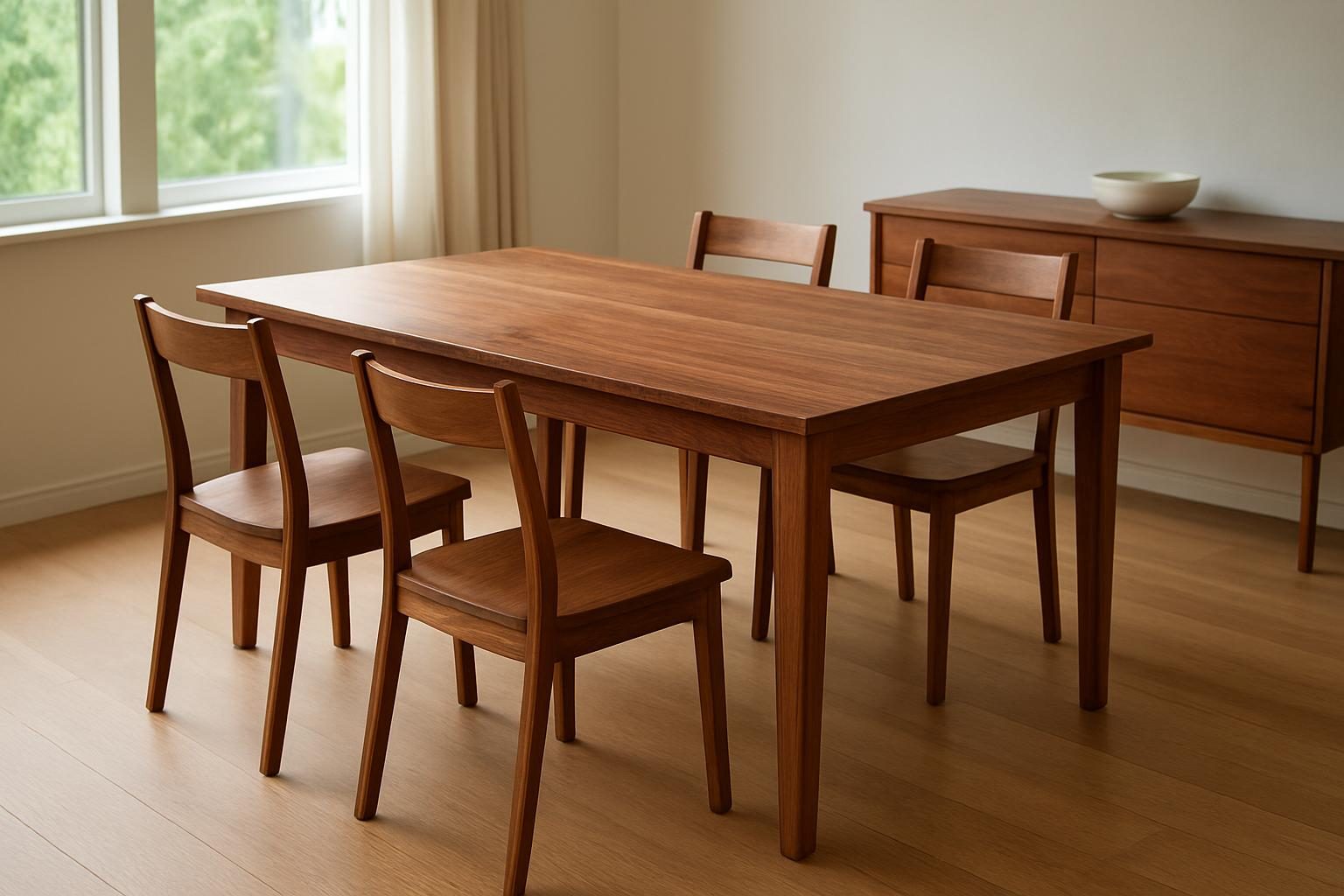
A four-leg table carries the top on four posts, one near each corner, tied together by aprons (the rails just under the top). The aprons keep the legs square to the top and resist racking, which is the sideways lean that loosens cheap tables over time. It is the most familiar table design there is.
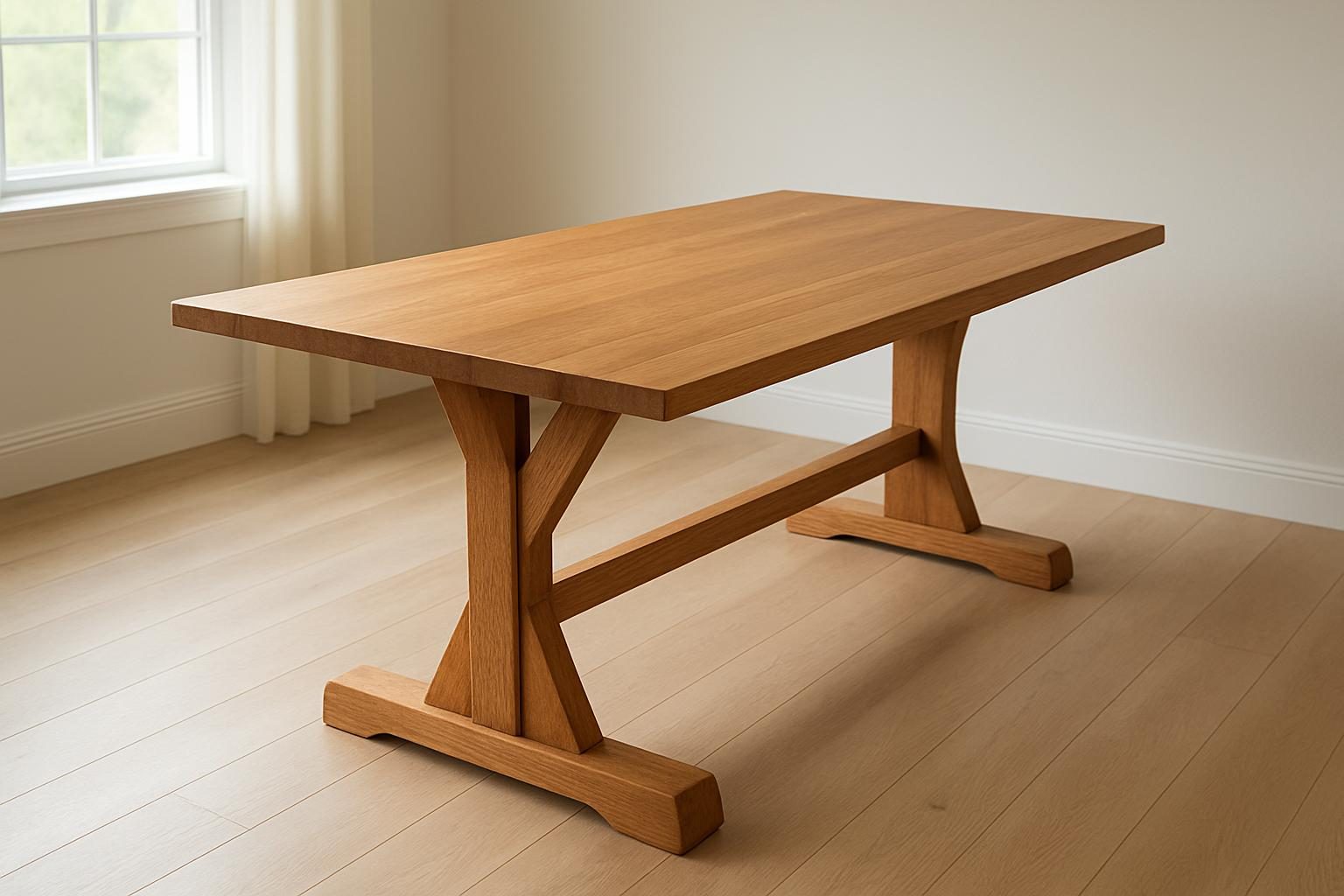
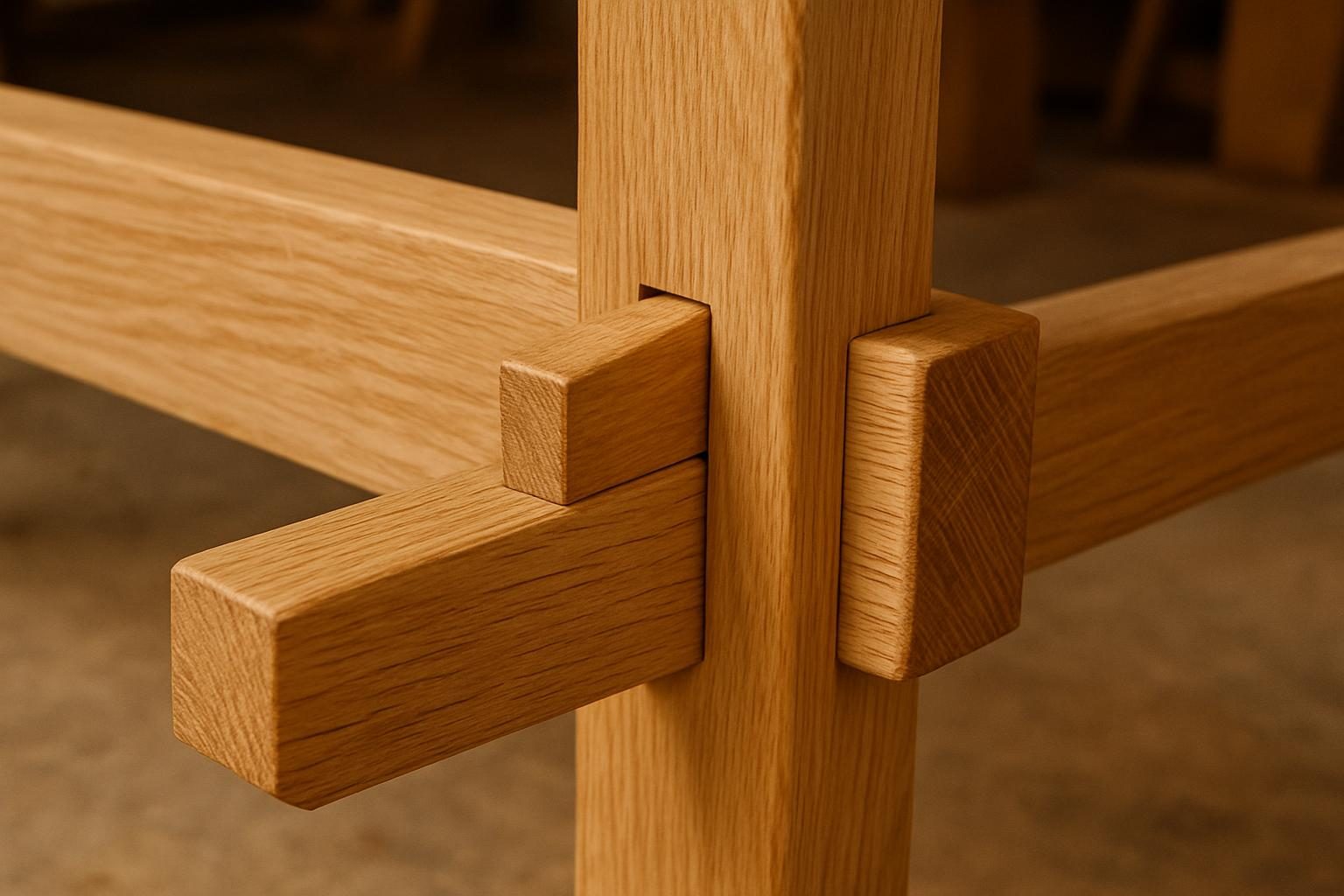
A trestle table carries the top on two end assemblies, each usually a pair of uprights or a solid slab on a foot, joined by a long stretcher running the length of the table underneath. The stretcher is what makes it work. In a well-built trestle it is joined with a through-tenon and often a wedge or peg, so it can be tightened or knocked down for moving.
The practical result is where the supports land. On a four-leg table they sit at the corners, right where people want to put their knees. On a trestle they sit well in from the ends, which changes the seating more than anything else about the design.
Seating: the biggest practical difference
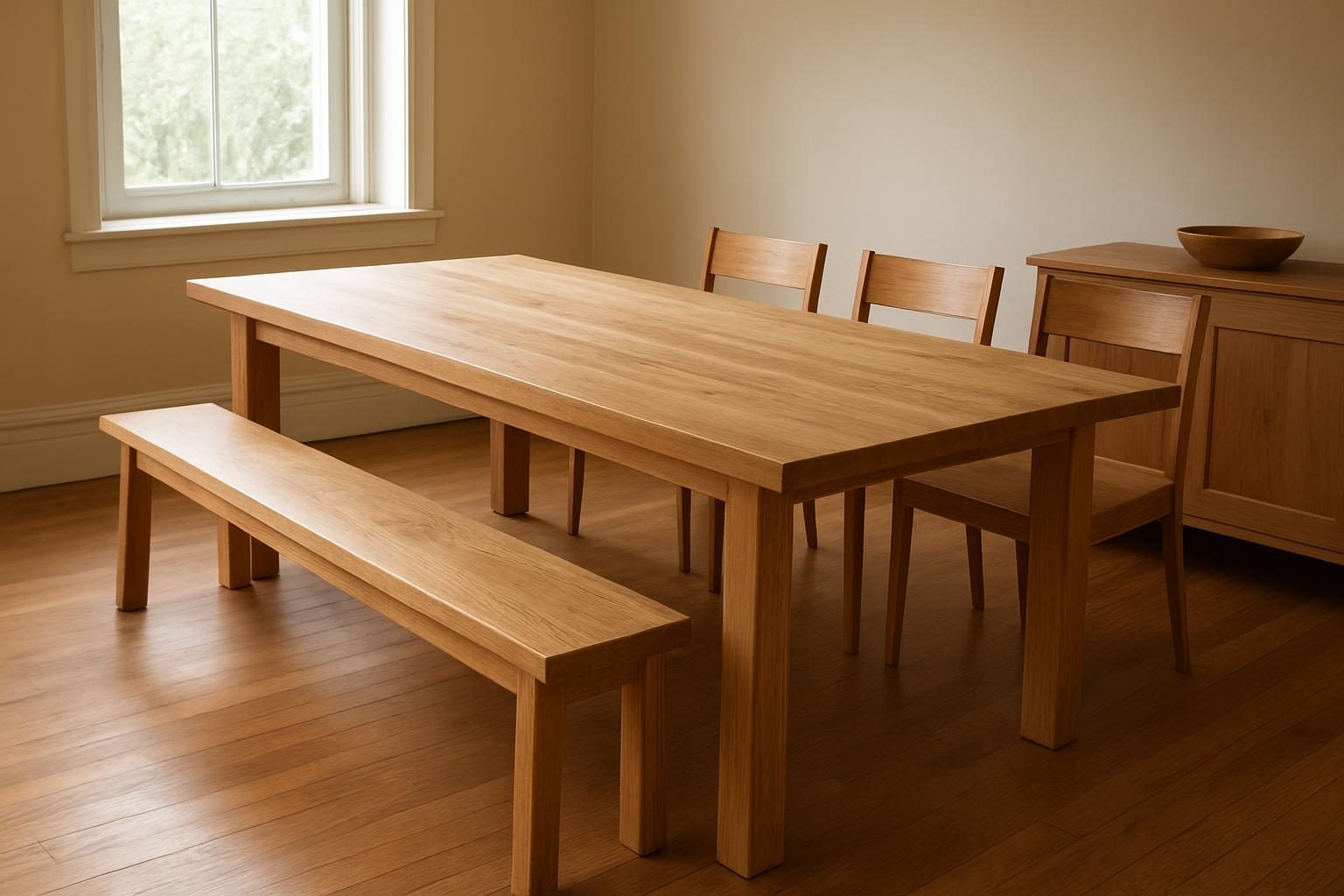
This is where most buyers feel the difference first. With corner legs, the person at the end of the table has a leg on each side of their space, and anyone seated at the corner has to angle their knees around a post. With a trestle, the ends and corners are open, so you can pull a chair right up to the head of the table or squeeze one more person in along a side.
As a rough guide, a four-leg table seats people comfortably at about 24 inches of edge per person, minus the room the corner legs steal. A trestle gets close to the full 24 inches along the whole length. On an 84-inch table, that can be the difference between six comfortable seats and eight workable ones. If seating count is your main concern, it is worth reading what size dining table seats 8, 6 and 10 alongside this.
| Top size (L x W) | Comfortable on four legs | Comfortable on a trestle |
|---|---|---|
| 72 x 36 in | 6 | 6 (7 in a pinch) |
| 84 x 38 in | 6 to 8 | 8 |
| 96 x 40 in | 8 | 8 to 10 |
| 108 x 42 in | 10 | 10 to 12 |
The trade-off runs the other way for the middle of the sides. A trestle’s foot or stretcher can get in the way of long legs along the sides, depending on the design, while four legs leave the underside of the table clear between the corners. A good trestle is drawn so the feet and stretcher stay out of the main knee zones, which is a design detail worth asking about.
The base decides who gets a comfortable seat, not just how the table looks.
Stability and how each one ages
People assume four legs are always sturdier and a trestle is always wobblier. Neither is automatically true. What matters is the joinery and the rigidity of the frame, not the layout.
A four-leg table stays stable because the aprons lock each leg to its neighbors. The weak point is the leg-to-apron joint. Mortise-and-tenon joints, glued and pinned, hold for generations. Pocket screws and metal corner brackets work loose over time, which is one reason the question of solid wood versus veneer and what you are really paying for comes down to construction as much as material.
A trestle stays stable because the long stretcher ties the two ends together and resists racking along the length. Its weak direction is end-to-end, so a good trestle has a heavy stretcher and often a pair of diagonal braces or a wide foot. Done well, it is very hard to move. Done cheaply, it sways when someone leans on one end.
- Four legs, good build: stable in every direction, no long stretcher to trip on, easy to move a few inches.
- Four legs, cheap build: loosens at the corners, racks sideways, needs tightening.
- Trestle, good build: very rigid, can be disassembled by pulling the wedges, heavy and settled on the floor.
- Trestle, cheap build: sways end to end, stretcher cracks or loosens at the tenon.
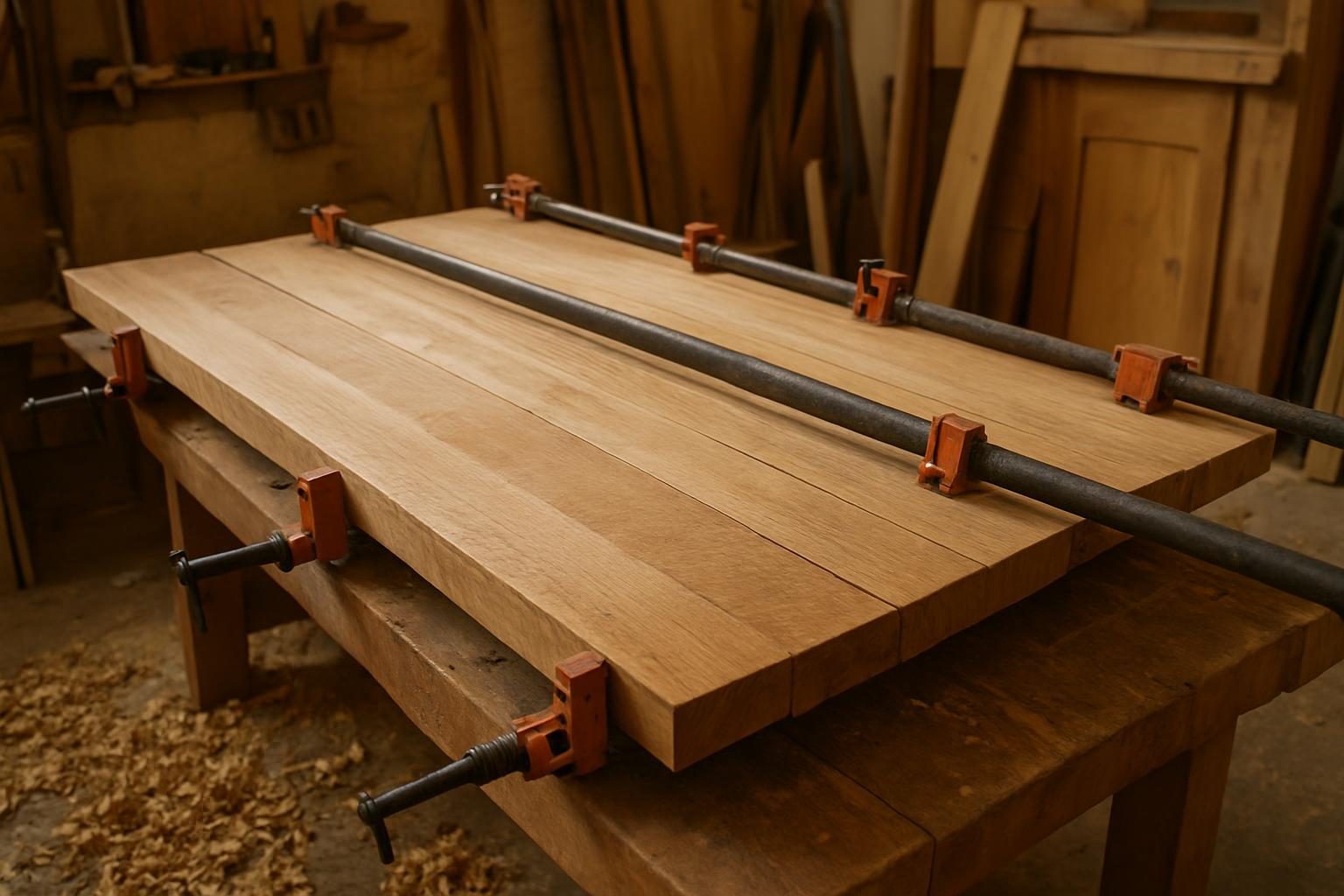
Wood movement matters here too, because a wide solid top swells and shrinks with the seasons. Four legs fixed rigidly to a top can fight that movement unless the top is fastened with slotted holes or buttons. A trestle top typically floats on the base the same way. If you want the full picture of how tops stay flat, see our post on breadboard ends and why good tables have them.
Style and how it reads in a room
A trestle has visual weight. The solid end assemblies and the long stretcher make the base a feature rather than a backdrop, so it suits farmhouse, rustic, mission and contemporary-organic rooms where you want the furniture to anchor the space. In a large room it looks right. In a small one it can feel heavy.
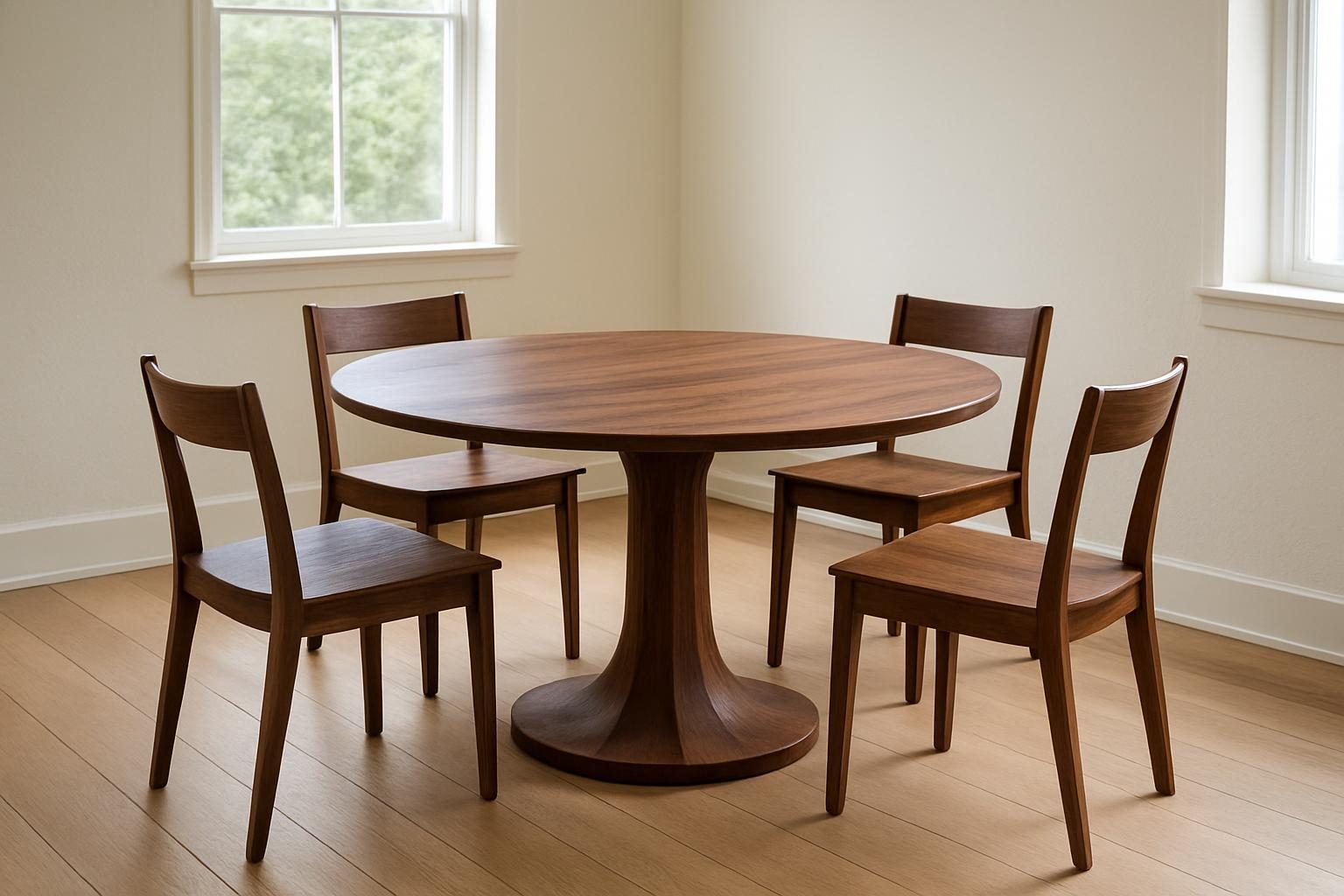
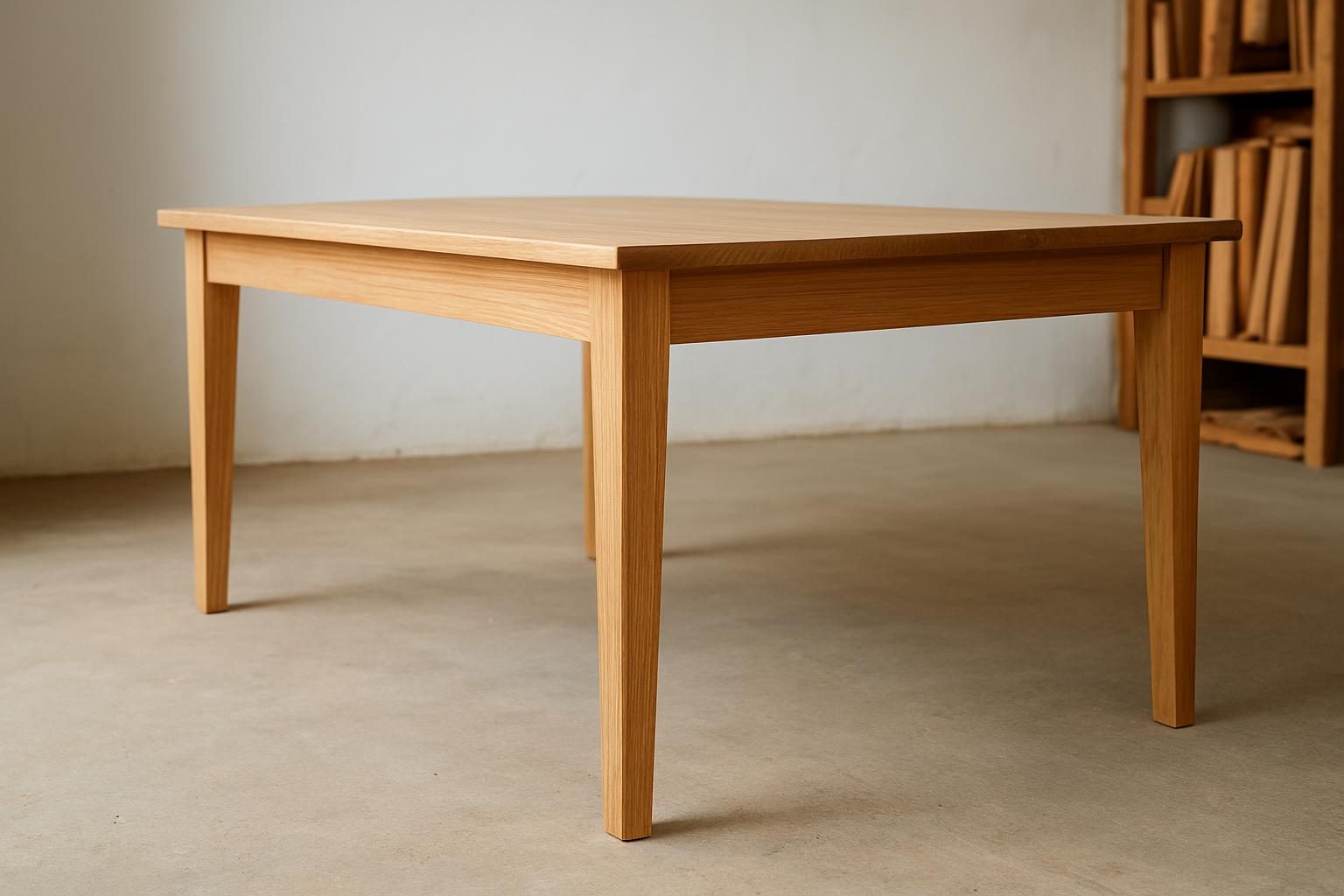
Four legs are the more flexible shape. Square tapered legs read mid-century, turned legs read traditional, thick square posts read modern farmhouse, and slim legs make a small room feel bigger because you can see under and past the table. If you are not sure what the rest of your furniture is doing, four legs are the lower-risk choice.
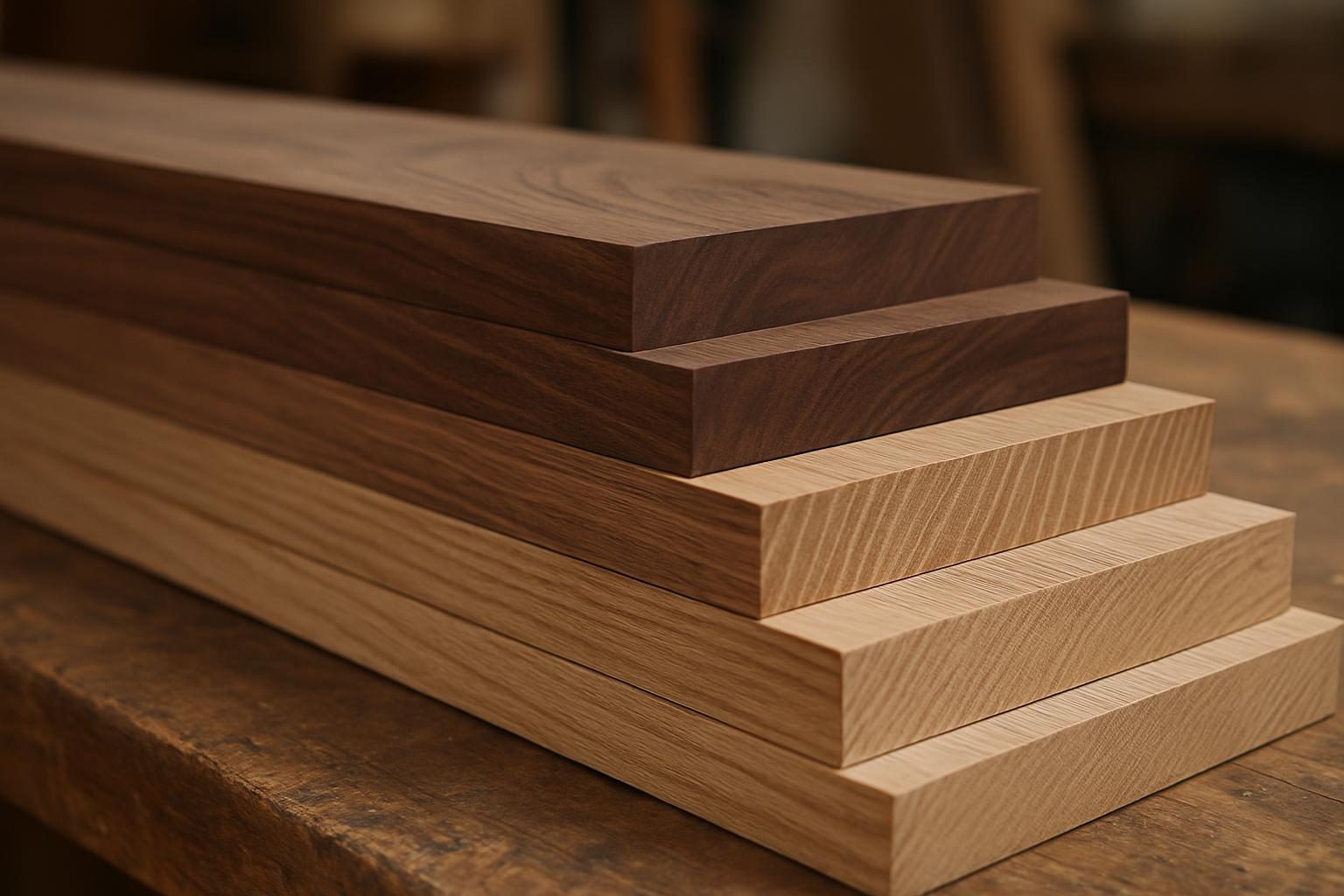
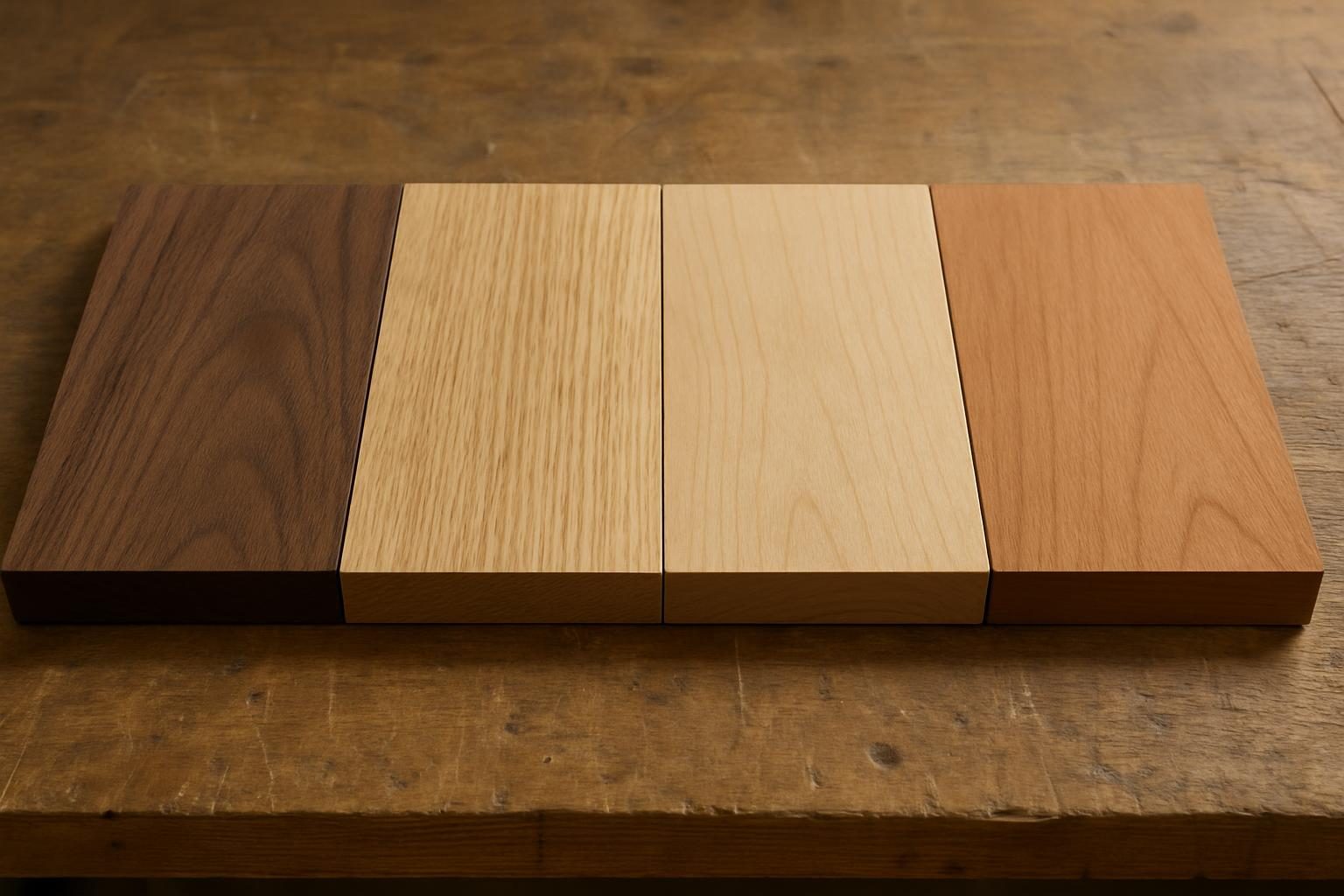
The species you pick changes the feel as much as the base does. A walnut trestle looks dark and substantial, while a white oak four-leg looks lighter and more casual. If you are weighing those two woods, our comparison of walnut versus white oak for a dining table will help.
A trestle makes the base part of the statement; four legs let the top do the talking.
Room size, shape and clearances
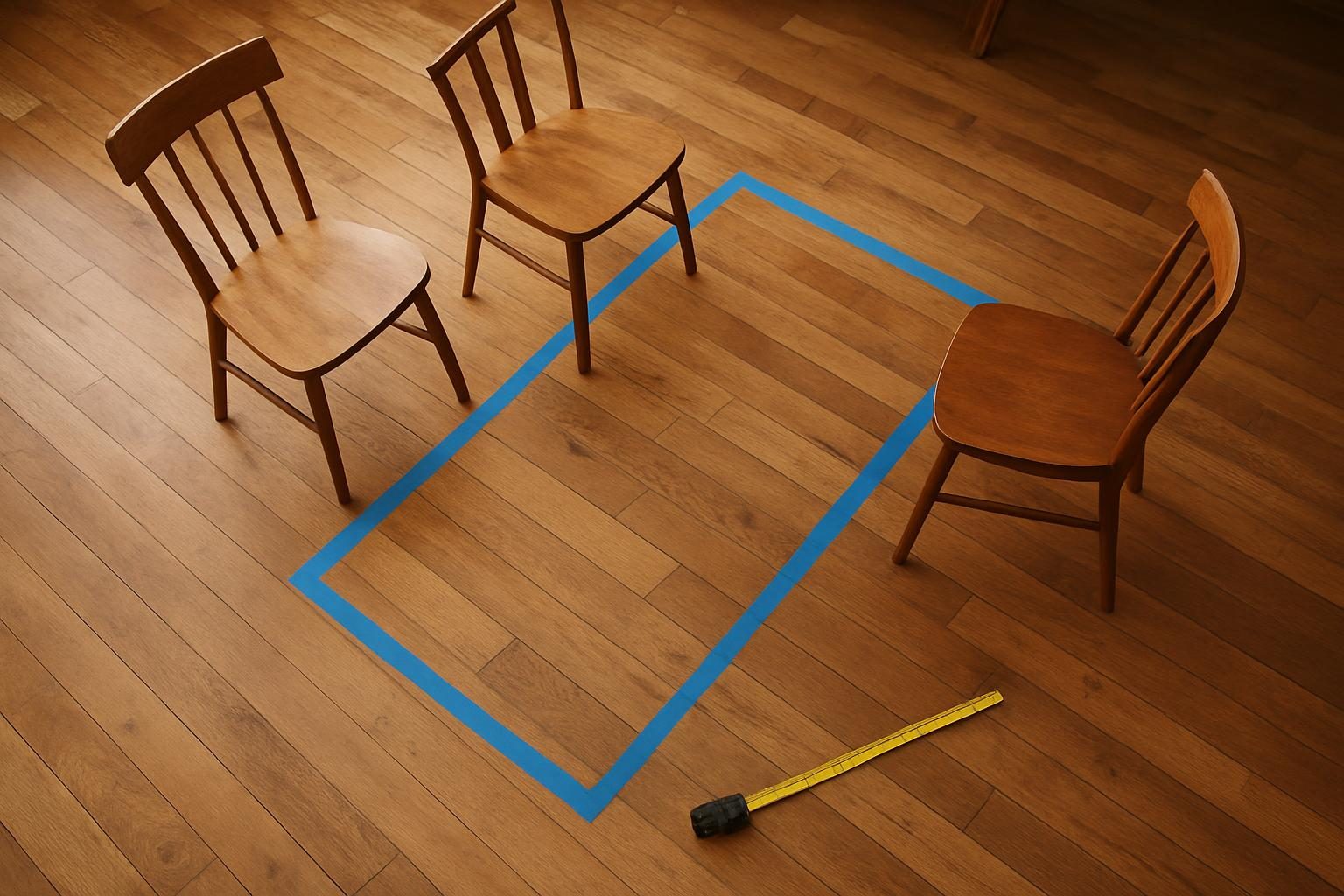
Whichever base you choose, you need room to pull chairs out and walk around. Plan on 36 inches of clearance from the table edge to the nearest wall or furniture, and 42 to 48 inches if people will be walking behind seated diners. A trestle’s end assemblies sit inboard, so the table can feel like it takes less floor than its length suggests, but the top still sets the footprint.
Round and square tables change this math, and the base question looks different for them. A single pedestal often suits a round top better than either of the two bases covered here, which we cover in round versus rectangular dining tables. For a rectangle, measure first, and use our guide on how to measure your dining room for a table before you fall for a size.
Cost, build and what to ask a maker
Neither base is dramatically more expensive on its own. Cost follows the amount of lumber and the joinery, not the shape. A heavy trestle with thick end slabs and a through-tenon stretcher uses more board feet than a pair of slim legs, while a four-leg table with a detailed apron and tapered legs takes more machine and bench time. The top is still the largest line on the quote. For the full breakdown of what drives price, see how much a custom dining table costs.
Whichever you pick, ask the maker how the joints are made, how the top is fastened so it can move, and what the finish is. A hardwax oil and a film finish behave differently on a table that gets daily use, and we compare them in hardwax oil versus polyurethane. If you are in Jacksonville, Hubert, Swansboro, Sneads Ferry, Richlands or around Camp Lejeune, local pickup or delivery means we can talk through the dimensions in person if you want. You can see what we build on our custom dining tables page, and the process page explains how a commission runs from quote to delivery.
FAQ
Is a trestle table more stable than a four-leg table?
Not automatically. Both can be built very stable. A trestle gets its rigidity from a heavy stretcher and solid joinery, while a four-leg table gets it from the aprons that tie the legs together. Poor joinery makes either one wobble.
Which base seats more people?
A trestle usually seats one or two more people around the same top, because there are no corner legs to work around and the ends are open. A four-leg table is more limited at the corners and ends, though it leaves the area under the sides completely clear.
Will a trestle table look too heavy in a small room?
It can. The solid end assemblies carry a lot of visual weight, so in a small or narrow room a four-leg table with slimmer legs often feels more open. In a larger room, a trestle tends to look settled and right.
If you have a room, a head count and a rough idea of the look you want, you can request a quote at /commission/.