The short version
- A custom solid hardwood dining table starts around $2,200 at our shop and commonly lands between $2,200 and $6,500.
- Size and species are the two biggest price levers; walnut costs noticeably more than white oak or maple.
- Base style, edge details, and finish add less than most people expect, but they add up.
- Store tables at the same price are usually veneer over engineered board. A solid table can be refinished for decades.
- You get a fixed quote up front and pay a 50% deposit to start.
If you’ve been pricing dining tables, you’ve probably noticed the range is huge. A showroom table can be $900 or $9,000, and the listing rarely tells you what’s under the surface. This post breaks down what a custom solid hardwood table costs, why, and where the money goes.
Our custom dining tables start at $2,200. Where yours lands depends mostly on how big it is and what wood it’s made from.
Typical price ranges by size
Size drives cost because it drives lumber. A bigger top needs more board feet, more flattening and glue-up time, and a heavier base. It also means more handling, since a 96-inch top is awkward for one person to move around the shop.
These are ballpark figures for a solid hardwood top with a straightforward base, in a mid-priced species like white oak or maple. Treat them as planning numbers, not a quote.
| Seats | Typical size (L x W) | Approx. price range |
|---|---|---|
| 4 | 48 x 36 in | $2,200 to $3,000 |
| 6 | 72 x 38 in | $2,800 to $4,000 |
| 8 | 96 x 40 in | $3,600 to $5,200 |
| 10 to 12 | 108 to 120 x 42 in | $4,800 to $6,500+ |
Width matters as much as length. Going from 36 to 42 inches wide adds comfort for serving dishes, but it also adds lumber and glue-up time.
How species changes the price
Species affects the price in two ways: what the lumber costs per board foot, and how hard it is to work. Harder woods dull tooling faster and take longer to sand and finish. Rare or highly figured boards cost more simply because there’s less of them.
Here’s roughly how common choices stack up. Janka hardness measures resistance to denting, so a higher number means a tougher surface for a family table.
- Soft maple (about 950 Janka): pale, even grain, usually the most economical hardwood option.
- Red oak (1,290): classic open grain, widely available, mid-range price.
- White oak (1,360): a bit denser and more water-resistant than red oak; a popular all-rounder.
- Hard maple (1,450): very durable and tight-grained; stains unevenly, so it’s usually finished natural.
- Black walnut (1,010): softer than oak but prized for rich color; often the priciest of the common choices.
- Cherry (950): darkens beautifully with age, mid-to-upper price.
Moving from maple to walnut can add $600 to $1,500 on a six-seat table. For a side-by-side look at grain, color, and durability, see our wood guide.
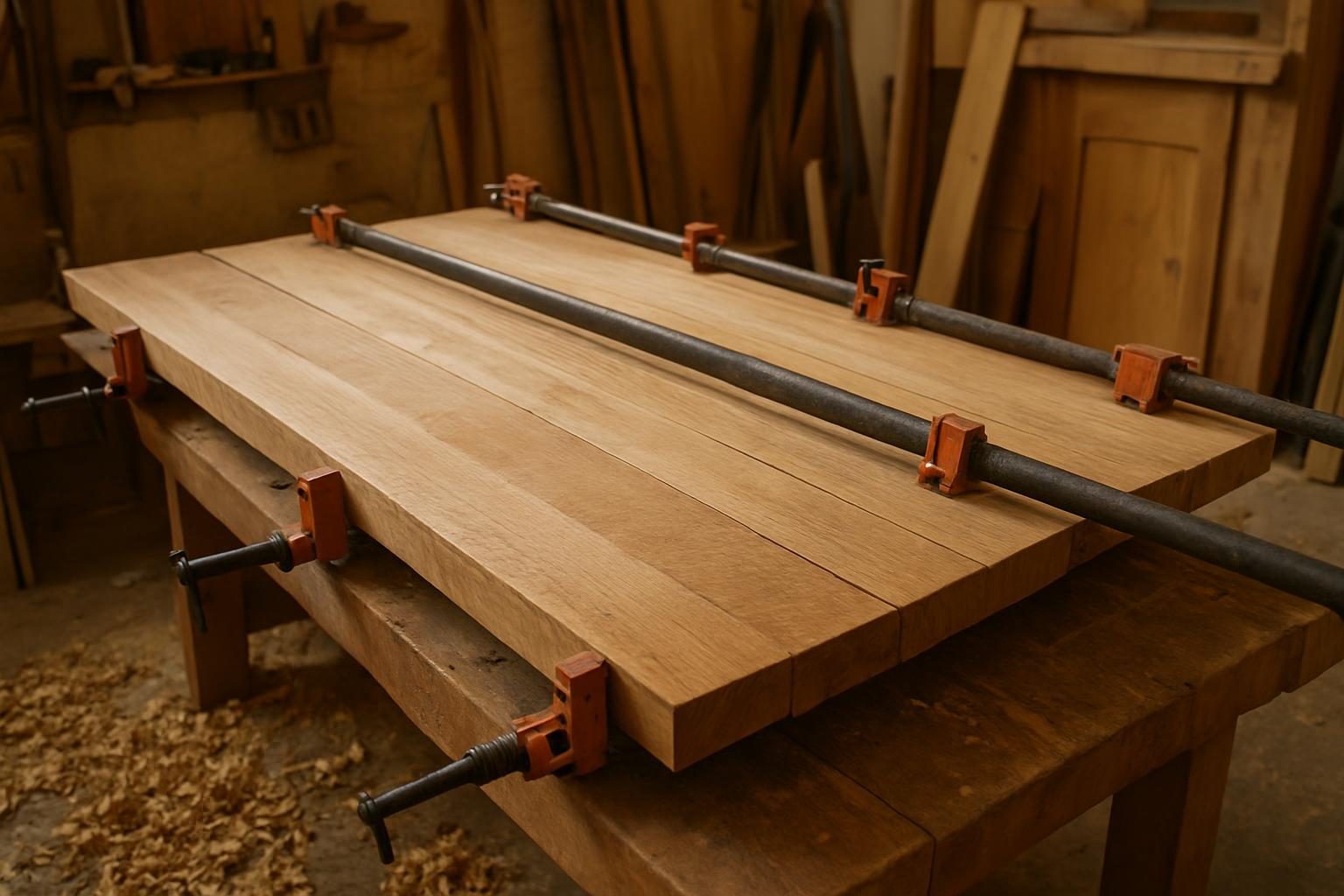
The wood on top is only part of the price; how it’s flattened, joined, and finished is the rest.
What else moves the number
Once size and species are set, a handful of design choices make smaller adjustments. None of these is dramatic alone, but together they can shift a quote by several hundred dollars.
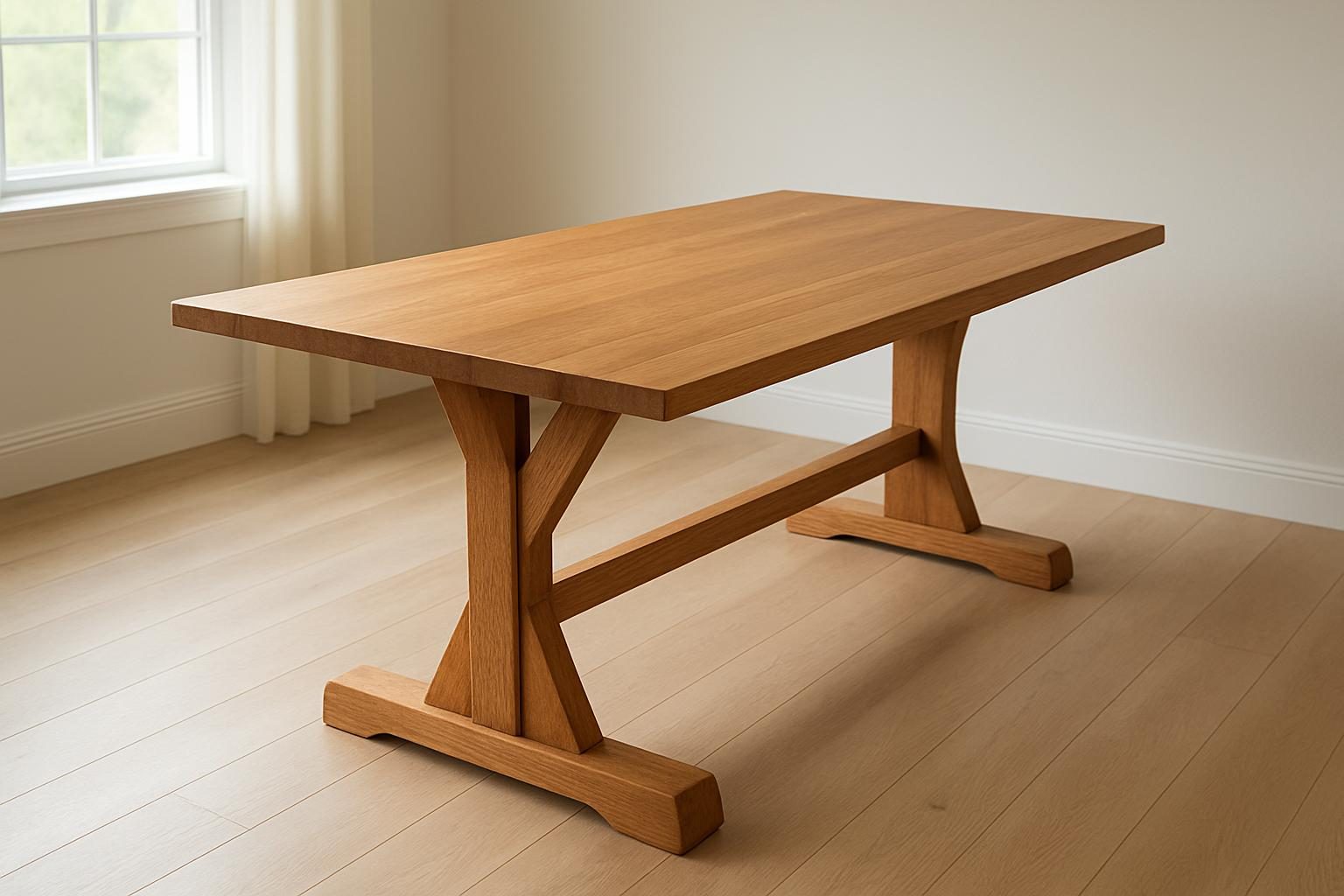
- Base style: a simple trestle or four-leg base costs less than a pedestal, a double pedestal, or a base with curved or shaped parts.
- Edge profile: a plain eased edge is the baseline; a heavy roundover, bevel, or live edge changes shop time.
- Top construction: a thicker top, breadboard ends, or a butterfly key to stabilize a crack all add labor.
- Extensions: a leaf or extension mechanism is real added cost, because the hardware and fitting have to be precise.
- Finish: a hard-wearing oil-and-wax or a tougher film finish both work; multi-step stained or toned finishes take more time.
Store-bought versus custom
The honest comparison isn’t price alone. It’s what you’re getting for it, and how long it lasts. A $1,800 table from a furniture chain is often a thin veneer or laminate over particleboard or MDF, with a solid-wood border or none at all.
That construction looks fine in the showroom. But veneer can’t be sanded back more than once or twice, and particleboard swells if a glass sweats on it or a pan of water gets spilled. When the surface is damaged, there isn’t much to save.
A solid hardwood top is the same material all the way through. You can sand out dents, scratches, and rings, and refinish it, which is why a well-built solid table can serve through several households. Delivery and assembly matter too: heavy solid tables are built to be moved in sections and put together properly, not stapled and cammed together.
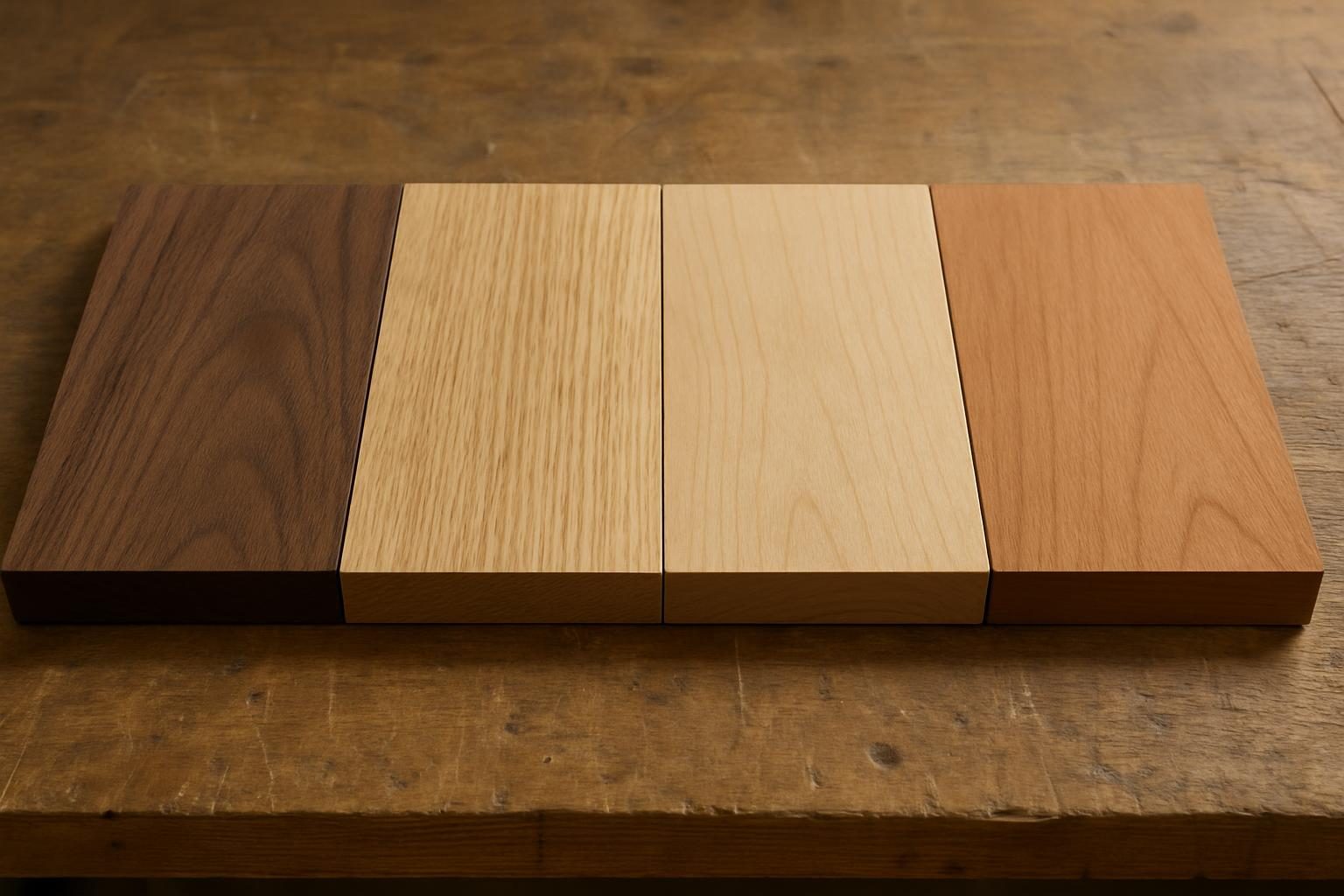
A table you can refinish is a table you only buy once.
How pricing and ordering work
We build a few commissions a month, so each table gets real attention. Quotes are fixed, meaning the number you approve is the number you pay, and we ask for a 50% deposit to begin. You can read the full sequence on our how a commission works page.
Furniture is local pickup or delivery. We serve Jacksonville and the rest of Onslow County, including Hubert, Swansboro, Sneads Ferry, Richlands, and the Camp Lejeune area. If you’re matching a table with other pieces, we also build benches that tuck under a dining table in place of chairs on one or both sides.
To get an accurate number, it helps to know your room dimensions, how many people you seat on a normal night versus a holiday, and a species you’re leaning toward. Even rough answers let us give you a useful range before you commit to anything.
FAQ
What’s the cheapest a custom solid wood dining table can be?
Our dining tables start at $2,200, which typically covers a smaller four-seat table in an economical species with a simple base. Going below that usually means compromising on solid wood, thickness, or construction quality.
Is walnut worth the extra cost?
It depends on what you want. Walnut is chosen mostly for its deep color and look rather than hardness, since it’s softer than oak or hard maple. If you want a darker table and are fine with a little more care, it’s a great pick; if durability per dollar is the priority, white oak or maple is the better value.
Does a bigger table cost proportionally more?
Roughly, yes, but not perfectly. Lumber and labor scale with size, though some costs like design, setup, and finishing prep don’t scale the same way. A 96-inch table isn’t double the price of a 48-inch one, but it’s meaningfully higher.
When you’re ready to talk size, species, and budget for your own table, request a quote at /commission/.