
A live edge coffee table keeps the natural outline of the tree along one or both long sides. No two are alike, which is the appeal, and also why sizing one takes more thought than ordering a standard rectangle. This guide covers the numbers that matter: slab length and width, thickness, finished height, base styles and what drives the price.
The short version
- Aim for a slab 44 to 54 inches long and 20 to 26 inches wide at its narrowest point.
- Finished height should land 1 to 2 inches below your sofa seat, usually 15 to 18 inches.
- Slab thickness of 1.75 to 2.5 inches looks substantial without feeling like a block.
- Base choice changes the whole look: hairpin legs read light, a solid wood base reads grounded.
- Our coffee tables start at $850; slab width, species and base complexity move the price.
What “live edge” actually means
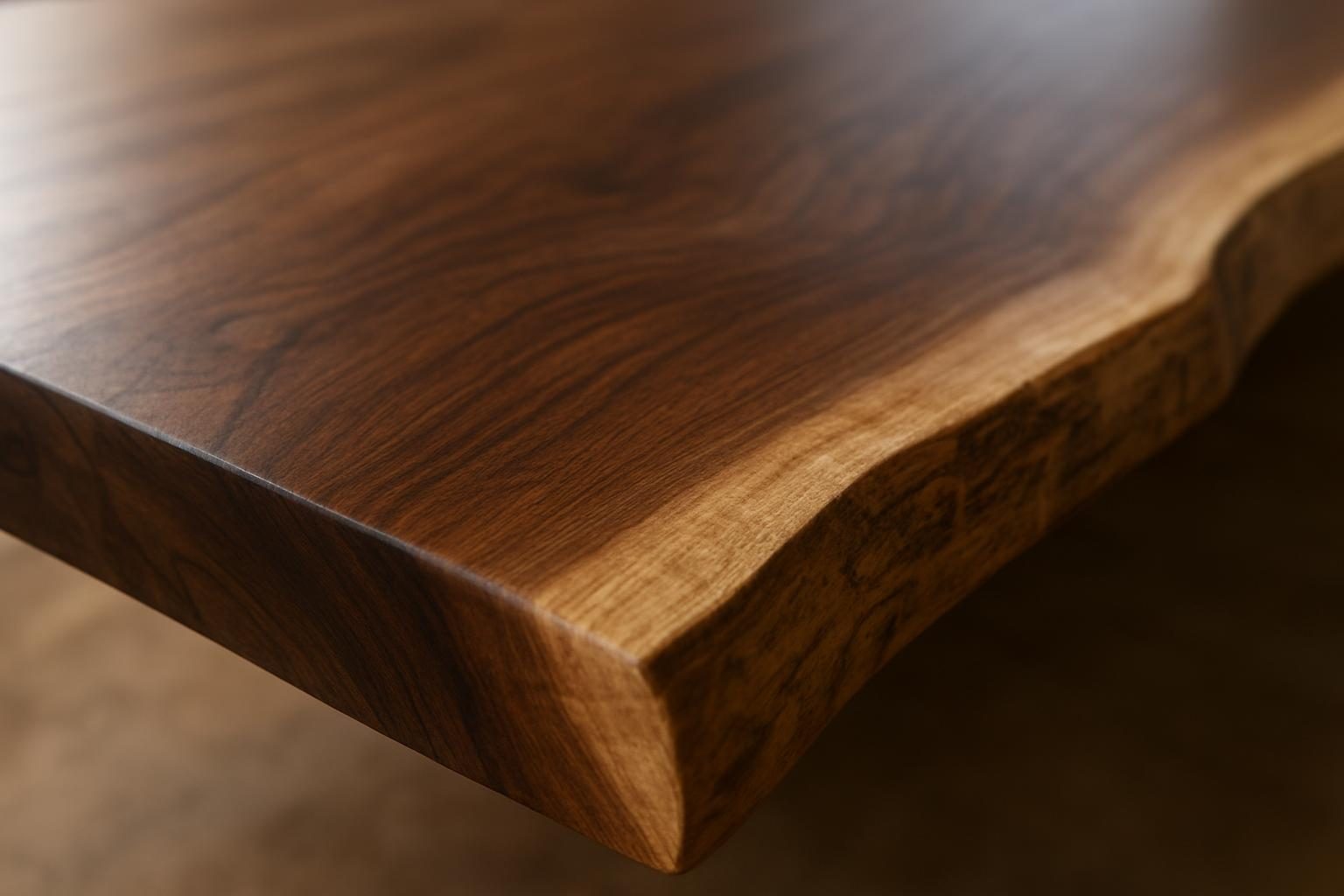
The live edge is the outer surface of the tree, where the bark was. On a slab, it is the wavy, uneven side you see once the bark is removed. We strip the bark, clean and stabilize the edge, and finish it so it is smooth to the touch and won’t shed.
A coffee table can have one live edge, two, or none. Two live edges give you the full organic outline and usually need a wider, more irregular slab. One live edge paired with a straight cut side is easier to tuck against a wall or sofa and often a better fit for tighter rooms.
Slab length and width
Length first. A good rule is for the table to be about two thirds the length of your sofa. For an 84-inch sofa, that points to a table around 48 to 56 inches long. Our coffee table size guide walks through the sofa-to-table math in more detail.
Width is where live edge gets interesting, because the slab is not a constant width. Check the narrowest point, not the widest. If one end of the slab bulges to 30 inches but the middle pinches to 16, your knees and your drink placement are governed by that 16.
- Minimum comfortable width: 18 inches at the narrowest point.
- Sweet spot: 20 to 26 inches for most living rooms.
- Leave walking room: 14 to 18 inches between the table edge and the sofa.
Measure a live edge slab at its narrowest point, because that is the width you will actually live with.
Thickness and finished height
Thickness is a proportion decision. A 1.5-inch slab looks refined on a light base. A 2.5-inch slab feels chunky and pairs better with a heavy solid wood base. Most of our coffee tables fall between 1.75 and 2.25 inches, which holds up well visually and is thick enough to stay flat.
Finished height is slab thickness plus base height. A standard coffee table is 16 to 18 inches tall, and the best rule is to land 1 to 2 inches below your sofa seat cushion. If your sofa seat sits at 18 inches, aim for 16 to 17. Low modern sofas at 15 inches call for a table closer to 14 or 15.
Base options and how they change the look
The base is half the design. The same slab can look airy or monumental depending on what holds it up.
| Base style | Look | Best for | Notes |
|---|---|---|---|
| Steel hairpin legs | Light, mid-century | Smaller rooms, thin slabs | Least expensive; fine under 2 inches thick |
| Square steel or flat bar frame | Modern, clean | Contemporary rooms | Carries heavier slabs well |
| Solid wood legs | Warm, traditional | Most living rooms | Matches or contrasts with the slab |
| Solid wood trestle or slab base | Grounded, substantial | Thick slabs, large rooms | Heaviest option; see our trestle vs legs comparison for how bases feel in a room |
One practical point: live edge slabs move with the seasons, so the base should let the top expand and contract. Fixed, rigid fastening is how tops end up cracking. We attach tops with fasteners that allow movement, which is the same reason we explain why solid wood furniture cracks and how it is prevented.
The slab gets the attention, but the base decides whether the table feels light or heavy in your room.
Choosing a species
Species sets the color, the grain and how the table wears. Walnut is the classic live edge choice: dark chocolate heartwood with lighter sapwood along the edge, and a Janka hardness around 1,010 lbf. White oak runs lighter and harder at about 1,360 lbf, with a tougher surface for a table that gets daily use.
Maple (around 1,450 lbf) is hard and pale, and it shows figure well but has less dramatic edge contrast. Cherry (about 950 lbf) darkens beautifully with age but is softer. Our wood guide compares the options side by side, and the walnut versus oak trade-offs in our walnut vs white oak post apply to coffee tables too.
Cracks, checks and what is normal
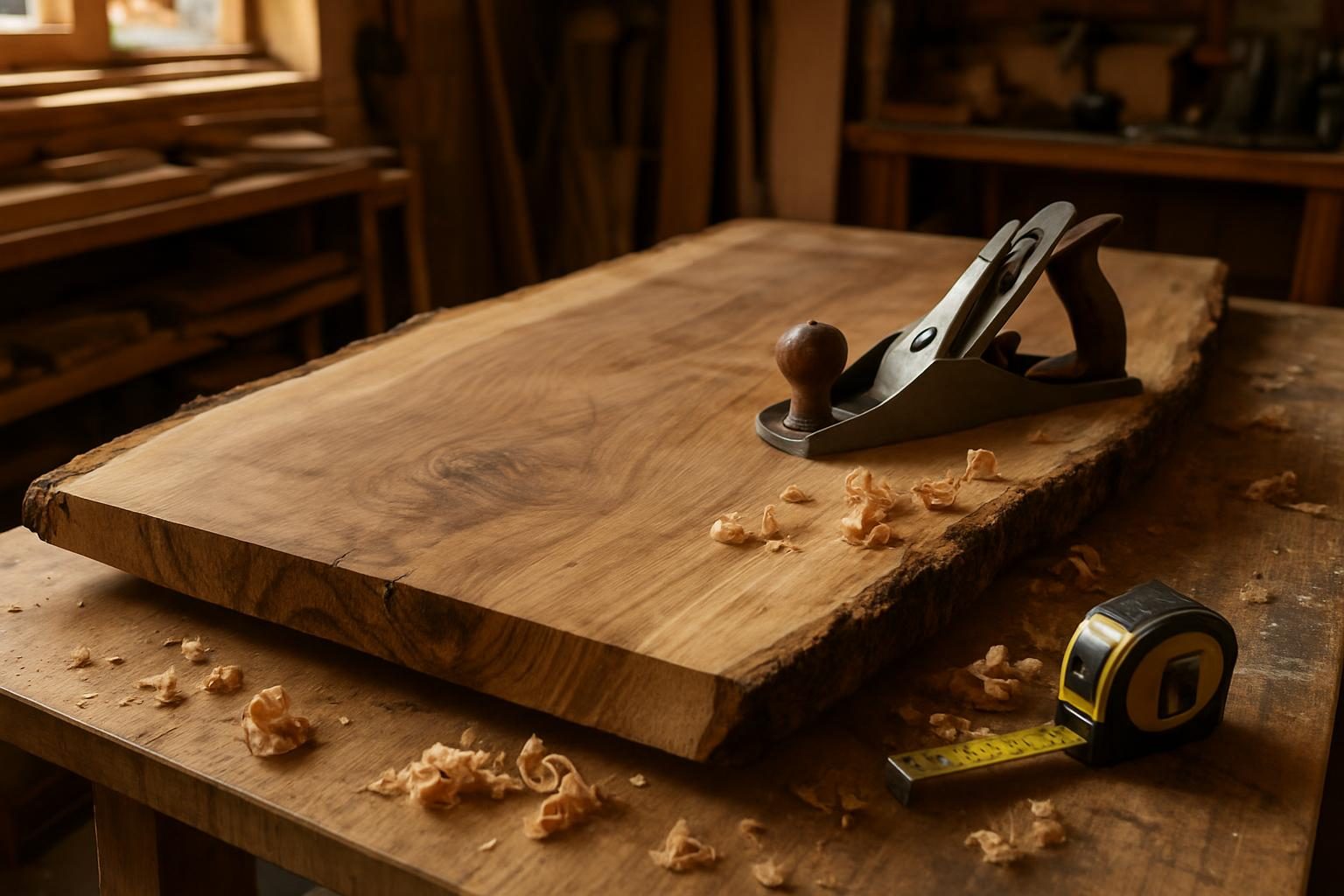
Live edge slabs often have character: small checks, knots, bark inclusions and the occasional void. Some of this is the point. The key question is whether a feature is stable and sound or whether it is a structural weakness.
We fill voids and stabilize checks where it makes sense, and we flatten and finish the surface so a glass sits level. Butterfly keys (small bowtie inlays) can lock a crack from spreading and double as a design detail. If a slab has a defect we think will not hold, we will say so before we cut, not after.
Finish and everyday care
A coffee table gets more spills, coasters-skipped moments and set-down keys than a dining table gets plates. For that reason we like a finish that is easy to maintain. Hardwax oil is simple to spot-repair; polyurethane gives a harder film that resists water longer. Our hardwax oil vs polyurethane comparison covers the choice in detail.
Whichever you pick, wipe spills promptly and use coasters for hot mugs. If a white ring does show up, our guide to removing water rings from a wood table will help.
What a live edge coffee table costs
Our coffee tables start at $850. A table at the low end is typically a more modest slab on a simple base. Price climbs with slab width and figure, thickness, species, the complexity of the base, and extras like butterfly keys or a two-live-edge outline. Every commission gets a fixed quote and a 50% deposit, so the number you agree to is the number you pay.
If you are in Jacksonville or elsewhere in Onslow County, including Hubert, Swansboro, Sneads Ferry and Richlands, we can handle local pickup or delivery. You can see the range on our coffee tables page and how the build runs on the process page.
FAQ
How thick should a live edge coffee table slab be?
Between 1.75 and 2.5 inches suits most rooms. Thinner slabs look lighter on hairpin or steel legs, while thicker slabs pair better with a solid wood base and larger spaces.
What height should a live edge coffee table be?
Most land between 15 and 18 inches. The best target is 1 to 2 inches lower than your sofa seat so the table is easy to reach without feeling like you are reaching down into it.
Will a live edge coffee table crack?
Solid wood moves with humidity, and small surface checks can appear in any slab. Proper drying, a base that lets the top move, and stabilized checks keep it sound for decades. Read more in our post on solid wood versus veneer furniture.
If you would like a live edge coffee table sized to your sofa and room, request a quote and we will start from your measurements.