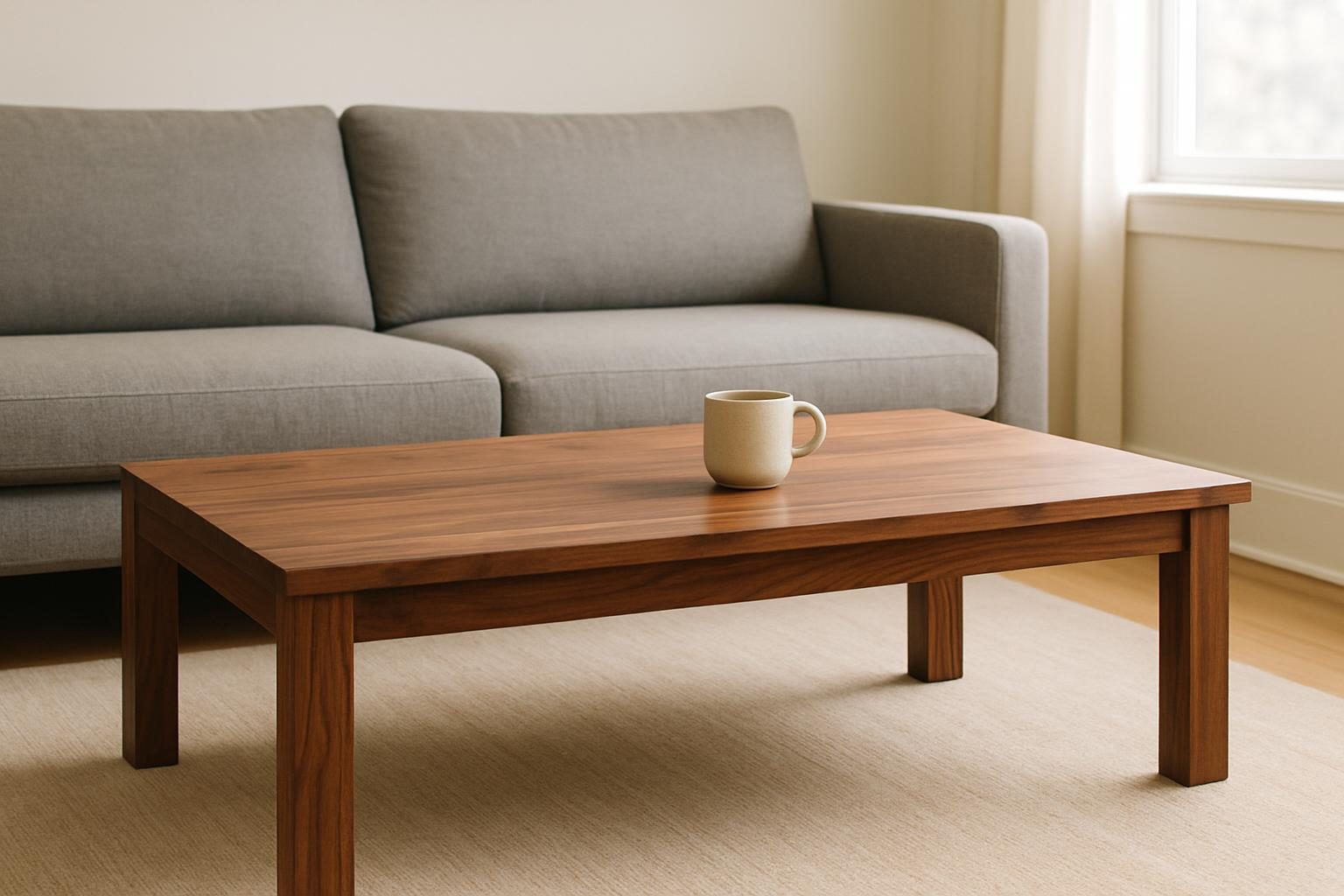
The short version
- Aim for a table about two-thirds the length of your sofa, which is roughly 42 to 56 inches for a standard 84-inch sofa.
- Keep the top within an inch or two of your seat height, typically 16 to 18 inches, and never higher than the seat cushion.
- Leave 14 to 18 inches between the table edge and the sofa front. Closer feels cramped; farther means you can’t reach your coffee.
- For a sectional, size to the open space in the L, not to the full length of the sofa.
- Leave at least 30 inches of walkway on any side where people need to pass.
A coffee table has one job: sit in the middle of a room and be useful without getting in the way. When it feels wrong, it is usually off by a few inches, too long for the sofa, too tall for the seat, or parked too far to reach. This guide gives you the numbers to get it right before you buy or commission anything.
Measure first, then decide. A tape measure and ten minutes beat any rule of thumb, but the rules below tell you where to start.
The Two-Thirds Rule for Coffee Table Length
The most reliable starting point is simple: your coffee table should run about two-thirds the length of the sofa it sits in front of. A standard sofa is around 84 inches long, so the sweet spot lands between 50 and 56 inches. A 72-inch loveseat pairs well with a table around 40 to 48 inches.
You can go a little shorter, down to about half the sofa length, and it will still look intentional. Go longer than three-quarters and the table starts to crowd the seating, leaving no room for end tables or for people to step around the ends.
| Sofa length | Coffee table length (about 2/3) | Acceptable range |
|---|---|---|
| 60 in (small loveseat) | 40 in | 30 to 45 in |
| 72 in (loveseat) | 48 in | 36 to 54 in |
| 84 in (standard sofa) | 56 in | 42 to 63 in |
| 96 in (large sofa) | 64 in | 48 to 72 in |
Width matters too. Most rectangular tables run 20 to 30 inches deep. Under 20 and it feels like a hallway shelf; over 30 and you’re reaching across a lot of wood to set down a mug.
Most coffee tables that feel wrong are wrong by only a few inches.
How Tall Should a Coffee Table Be?
Match the table to the seat, not to the room. Most sofa seat cushions sit 16 to 20 inches off the floor, and the best coffee table height lands within an inch or two of that. The common range is 16 to 18 inches.
A top that sits at or slightly below the seat height is easy to reach and easy to see over. Anything taller than the cushion and you’re lifting your arm to set a drink down, which gets old fast. Deep, low-slung sofas call for tables closer to 15 or 16 inches, while firmer, higher seating can handle 18.
- Low (14 to 16 in): modern low sofas, floor-level seating, a relaxed look.
- Standard (16 to 18 in): works with most sofas and chairs.
- High (19 to 22 in): only with tall seating or if the table doubles as a work surface. Rare, and often awkward.
If you eat at your coffee table or work on a laptop there, nudge the height up toward 18 inches and keep the depth at 24 or more. Otherwise you’ll be hunching over a surface that was built for looking at, not using.
Distance from the Sofa
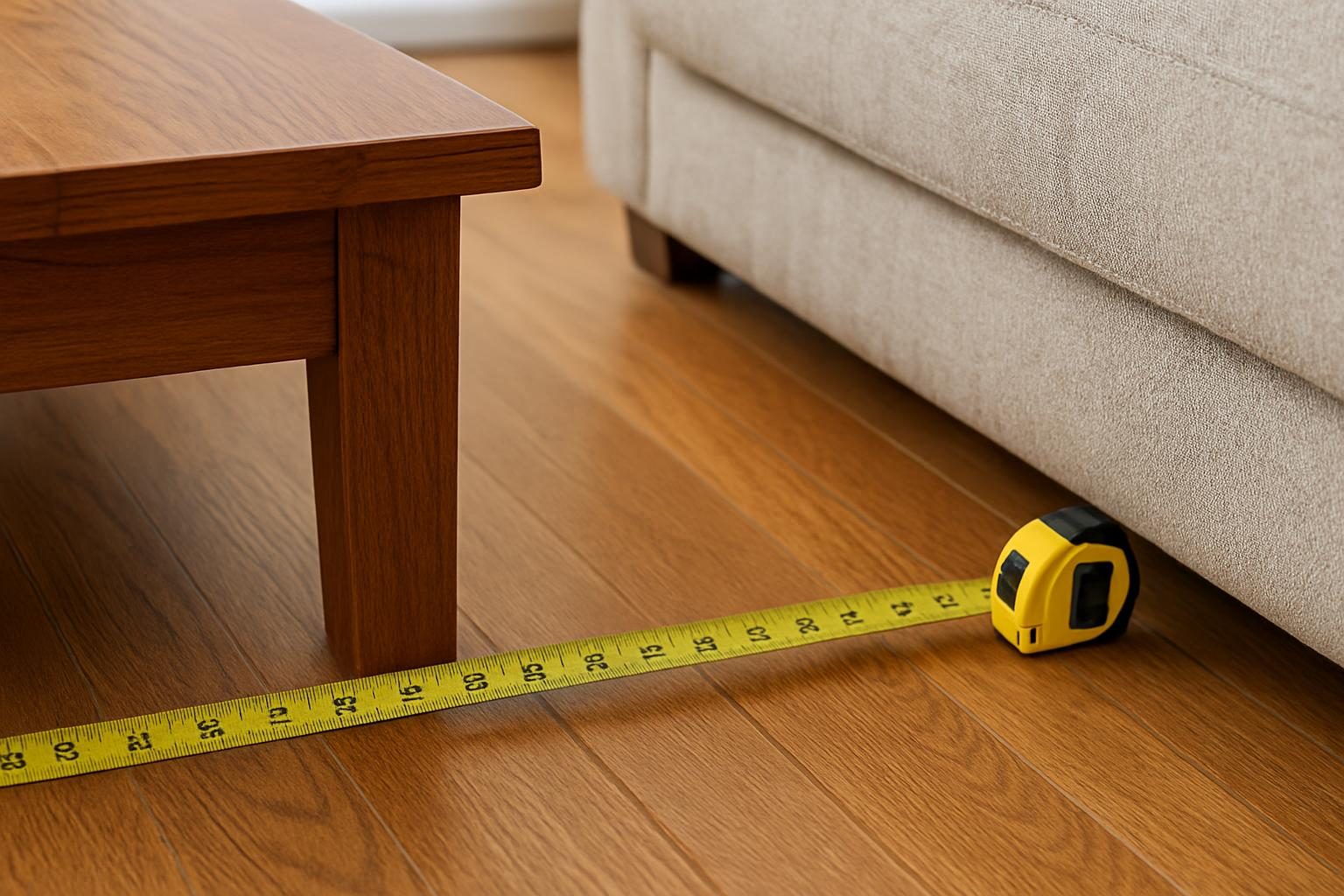
The gap between the table edge and the sofa front is the measurement people get wrong most often. The target is 14 to 18 inches. That’s close enough to reach a drink without leaning and far enough to stand up and walk past your knees.
Under 12 inches and getting on and off the sofa becomes an exercise in shuffling sideways. Over 20 and the table drifts into its own territory, so you’re leaning forward for every cup. In a tight room, you can stretch to 12 inches, but test it by sitting down and standing up a few times.
Walkways follow a different rule. Anywhere people need to pass, leave at least 30 inches clear, and 36 is more comfortable. That means the table, the sofa, and any chairs have to share the room without pinching the paths between them.
Sizing a Coffee Table for a Sectional
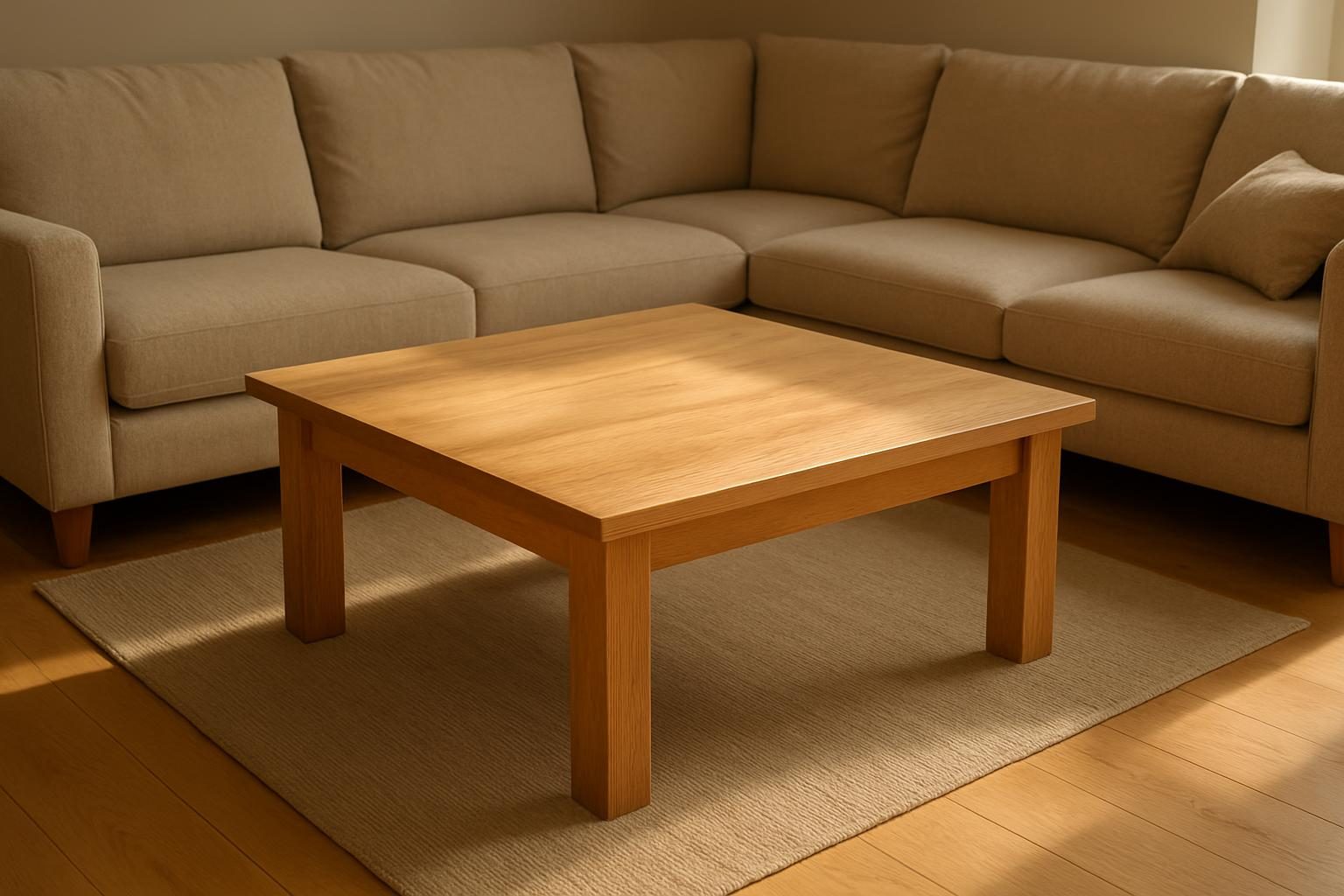
Sectionals break the two-thirds rule, because the full length of the sofa isn’t the space you’re filling. Measure the open area inside the L instead, from the inside face of one arm to the other, and from the front of the seats to where you want the table to end.
For a typical sectional, a square or near-square table works better than a long rectangle. Think 36 to 44 inches on a side, or a 42 to 48 inch round. The shape follows the seating, so everyone gets an equal reach, and there are no sharp corners pointed at anyone’s shins.
Keep the same 14 to 18 inch gap on both sides of the L. If the corner makes that tight, shrink the table before you move the sofa. A slightly smaller table in the right spot beats a big one that blocks the way to the other side of the room.
Measure the open space in the L, not the length of the sofa.
Shape, Weight and Wood
Rectangular tables suit long, narrow rooms and standard sofas. Rounds and ovals soften tight spaces and are kinder to kids and corners, and they hold their own in a sectional. A table with a lower shelf gives you hidden storage but adds visual weight, so skip it in a small room.
Material changes how the table lives. A solid hardwood top handles years of mugs and elbows, and the hard species resist dents: white oak rates around 1,360 on the Janka scale, and walnut about 1,010, which is plenty for a living room. Our wood guide compares species side by side. For the difference between a real top and a thin face, see solid wood vs veneer furniture.
When a Standard Size Won’t Fit
Store-bought tables come in a handful of sizes, and your room may not match any of them. An odd-width sofa, a low-slung sectional, or a narrow room can leave you choosing between a table that’s slightly too big and one that’s slightly too small.
Building to your exact measurements solves that. Our coffee tables start at $850 and are made to the length, depth and height you need, so the 17-inch seat and the 52-inch sofa get a table that actually belongs with them. For a quick sense of how a commission runs from first measurement to finished piece, see how a commission works. We build for homes in Jacksonville and across Onslow County, including Hubert, Swansboro, Sneads Ferry and Richlands, with local pickup and delivery.
If you’re also furnishing a dining space, the same measure-first habit applies. Our post on how to measure your dining room for a table walks through it.
FAQ
What is the standard coffee table size?
A common rectangular coffee table runs 44 to 54 inches long, 22 to 30 inches deep, and 16 to 18 inches tall. That fits a standard 84-inch sofa well, but “standard” is only a starting point. Your sofa length and seat height should drive the final numbers.
Should a coffee table be lower than the sofa?
Yes, slightly. Aim for a top that’s level with the seat cushion or an inch or two below it. A table taller than the seat is awkward to reach over, and one that’s much lower makes you stoop for a drink.
How far should a coffee table be from the sofa?
Leave 14 to 18 inches between the table edge and the front of the sofa. That keeps everything within easy reach while leaving room to stand up and walk past. In a tight room you can go as close as 12 inches, but test it by sitting and standing a few times first.
Ready to size a table to your own room? Request a quote at /commission/.