Category: Wood & Finishes

  • Ash Wood Furniture: Pros, Cons and Cost

    Ash Wood Furniture: Pros, Cons and Cost

    Ash is one of the best-kept secrets in furniture woods. It is hard, strong, bright and open-grained, and it behaves a lot like white oak at the bench. It also comes with a supply story you should know about before you commit to it.

    The short version

    • White ash has a Janka hardness around 1,320 lbf, a little harder than red oak (about 1,290) and not far under white oak (about 1,360).
    • It runs pale cream to light tan with bold oak-like grain, and it takes stain well.
    • Ash usually costs less than white oak, though emerald ash borer is tightening supply and nudging prices.
    • It is a poor choice outdoors and not rot resistant, so keep it as indoor furniture.
    • For a dining table, plan on roughly $2,200 and up for solid ash, depending on size and design.

    What Ash Is and Why Makers Like It

    Ash is a ring-porous hardwood, meaning the growth rings show up as clear bands of large pores, much like oak. That gives it the same strong, cathedral-style grain on flatsawn boards and a tidy straight stripe on quartersawn ones. White ash (Fraxinus americana) is the species most often sold as ash lumber in the eastern US.

    The heartwood and sapwood of white ash are close in color, so you do not get the harsh contrast you see in walnut or cherry. Boards come out evenly pale, from near-white to light tan, with an occasional darker brown streak. That consistency makes glue-ups easy to match and gives a calm, clean look.

    It is also a classic tool wood. Baseball bats, tool handles and bent chair parts have been made from ash for generations because it is tough and shock resistant. That same toughness is why it holds up well as a table or bench.

    Ash vs Oak: How They Compare

    If you like the look of oak but want a lighter, calmer tone, ash is the natural alternative. The two woods are close cousins in how they work and wear. The differences come down to color, grain character and price.

    TraitWhite AshWhite OakRed Oak
    Janka hardness~1,320 lbf~1,360 lbf~1,290 lbf
    ColorCream to light tanLight tan to brownTan with pink/red cast
    GrainOpen, bold, straightOpen, with ray fleckOpen, coarse
    Rot resistancePoorGoodPoor
    Typical costModerateHigherLower

    The big practical gap is rot resistance. White oak has tyloses in its pores that make it water resistant, which is why it is used for barrels and outdoor work. Ash has no such defense, so it belongs inside. For a deeper look at how oak varies by cut, see our post on quartersawn vs flatsawn white oak.

    Ash gives you oak’s strength and grain with a lighter, quieter color.

    Pros of Ash Furniture

    The case for ash is strong for the right buyer. It is hard enough for daily family use, and it has the open grain people love in oak. It also tends to be easier on the budget than white oak.

    • Durable: At around 1,320 lbf it resists dents and everyday wear better than walnut (about 1,010) or cherry (about 950).
    • Light and bright: A pale table makes a dining room feel larger and pairs well with both warm and cool palettes.
    • Takes stain and finish well: You can leave it natural, go warm honey, or stain it darker to read as a different species.
    • Machines cleanly: It cuts, planes and shapes well, which allows crisp joinery and clean edge profiles.
    • Reasonable stability: With proper seasoning and good construction, it holds flat like other quality hardwoods.

    If your home leans Scandinavian, coastal or modern farmhouse, ash fits in without trying. For that farmhouse look, our guide to farmhouse dining tables, woods and sizes is a good companion read.

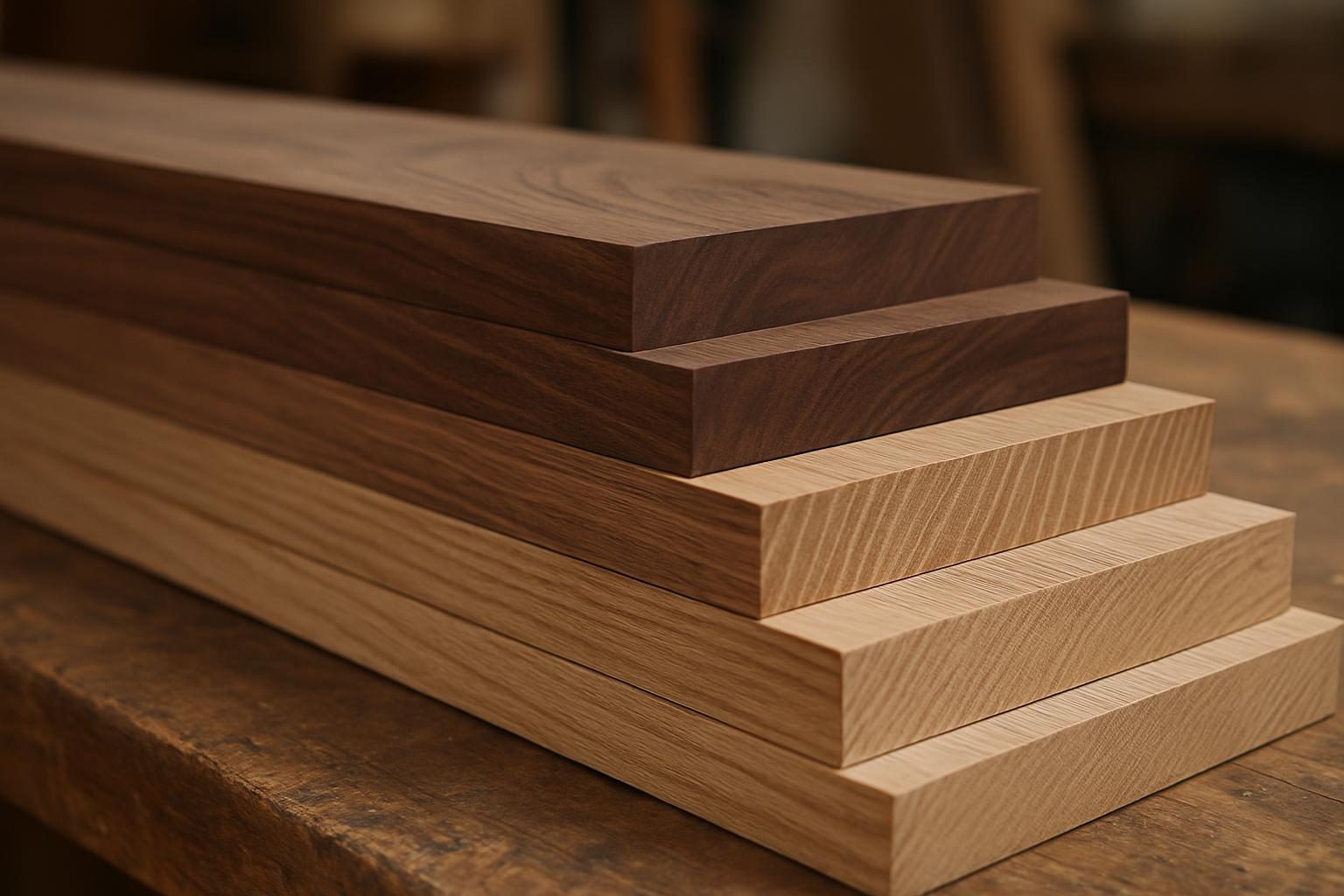
    Close-up of flatsawn ash boards showing cathedral grain next to a sample of white oak

    Cons and Limits You Should Know

    Ash is not perfect, and a good builder will tell you where it falls short. The main drawbacks are cosmetic and environmental rather than structural. None of them are dealbreakers, but they matter.

    • Not for outdoors: It rots when it stays wet, so skip porch tables and patio benches.
    • Open grain can catch crumbs: The pores are visible, so a pale table with heavy grain shows spills in the grain if you leave them. A good finish helps.
    • Less rich color: If you want deep, dramatic tone like walnut, ash will not deliver it without staining.
    • Light wood shows dark marks: Water rings and stains read more clearly on pale wood, so finish choice matters.

    That last point is easy to manage. Our comparison of hardwax oil vs polyurethane walks through which finish suits a busy household, and if a mark does show up, the guide to removing water rings from a wood table covers the fixes.

    Ash is a fine interior wood, but it wants to stay dry.

    The Emerald Ash Borer Supply Story

    Here is the part most buyers do not hear about. The emerald ash borer, an invasive beetle first found in the US in 2002, has killed hundreds of millions of ash trees across North America. It is the reason white ash is facing real supply pressure.

    The effect on furniture buyers is twofold. First, a lot of ash is being cut as infested or dying trees are removed, so there has been plenty of salvage lumber on the market. Second, long term, the healthy mature ash that makes the best furniture boards is becoming scarcer, which can push prices up and limit board width and length.

    Lumber from borer-killed trees is generally fine to use if it is milled and dried promptly, because the beetle damages the living tree’s ability to move water, not the wood itself. Stain from the larvae’s galleries can leave some surface marks, which some makers like for character. Ask your builder where the stock comes from and how it was dried.

    Stack of rough ash lumber drying in a small woodworking shop

    What Solid Ash Furniture Costs

    Ash generally lands at or a bit below white oak and well under walnut for the same piece. Final price depends on board width, how clear the lumber is, and the complexity of the build, not just the species. Our baseline starting prices apply, and ash fits comfortably within them.

    PieceStarting price (solid hardwood)
    Dining tablefrom $2,200
    Deskfrom $1,500
    Console tablefrom $900
    Coffee tablefrom $850
    Benchfrom $550
    Cutting boardfrom $95

    For a full breakdown of what drives cost up or down, read how much a custom dining table costs. You can also browse our custom dining tables to see the range of sizes and bases.

    Shop tip: If you want an ash table to look more like oak, ask for a light amber stain and a matte finish. If you want it to stay bright, a clear hardwax oil keeps the pale tone without yellowing much.

    Is Ash the Right Choice for You?

    Choose ash if you want a hard, durable, light-toned table with strong oak-style grain, and you are comfortable keeping it indoors. It is a smart pick for family dining tables, desks, benches and console tables. It is especially good when you want value without giving up solid hardwood.

    Skip it if you need outdoor use, or if you are set on the deep chocolate tone of walnut. For a side-by-side of two other popular options, see walnut vs white oak for a dining table, or compare more species in our wood guide. We build for Jacksonville and the rest of Onslow County, including Hubert, Swansboro, Sneads Ferry and Richlands, with local pickup and delivery.

    FAQ

    Is ash a good wood for dining tables?

    Yes. At roughly 1,320 lbf on the Janka scale it resists dents and daily wear well, and its open grain looks a lot like oak. Just keep it indoors and pick a finish suited to spills.

    Is ash cheaper than oak?

    Often it is slightly cheaper than white oak, but the gap varies with the lumber market. Emerald ash borer is tightening supply of mature ash, so prices can shift over time.

    Can you use ash furniture outdoors?

    Not recommended. Ash is not rot resistant and will break down when it stays wet, so white oak or another durable species is a better outdoor choice.

    If you want to price out an ash piece, you can request a quote at /commission/.

  • Why Cherry Wood Darkens (and How to Make It Even)

    Why Cherry Wood Darkens (and How to Make It Even)

    The short version

    • Cherry darkens because of oxidation, sped up by light. It is a chemical change in the wood’s extractives, not a flaw and not dirt.
    • Most of the shift happens in the first 3 to 6 months, then slows to a crawl over the next few years. Expect pale pinkish-tan to rich reddish brown.
    • Uneven color comes from uneven light exposure: a vase, a placemat, a rug edge, a window that hits one end of the table.
    • You can’t stop the darkening, but you can even it out by exposing the whole piece to light early and rotating anything that sits on it.
    • Finish choice changes how the color develops. An oil-based finish deepens it right away. A water-based finish stays paler longer.

    What cherry looks like the day it’s built

    Freshly milled American black cherry is not the deep red-brown most people picture. It’s a pale pinkish tan, sometimes with a slightly greenish or gray cast, with a few darker streaks where heartwood meets sapwood. Many people are surprised by how light it looks coming out of the shop.

    That surprise is the whole reason this post exists. If you pick cherry from a showroom sample that has been sitting in a sunny window for ten years, you’re looking at where the wood ends up, not where it starts. A new cherry table will look noticeably different on delivery day than it will at the one-year mark.

    Why cherry darkens: oxidation and light

    Cherry is full of natural compounds called extractives, the same stuff that gives the heartwood its color in the first place. When those compounds are exposed to oxygen, they react and deepen in color. Light, especially the UV portion, speeds that reaction up considerably.

    So it’s two things working together. Oxygen starts the process on any exposed surface, and light drives it faster. That’s why a board stored in a dark shop darkens slowly while the same board on a table by a window can change visibly in weeks.

    It’s also why the change is a surface-and-near-surface effect. Plane or sand through the darkened layer and you’re back to pale wood underneath, which will start darkening again as soon as it’s exposed. That matters for repairs, which we’ll get to.

    Cherry doesn’t fade like paint, it matures like leather.

    The first-year timeline

    The speed of darkening depends on how much light the piece gets, but the general arc is predictable. Here’s a realistic picture for a table in a normally lit room with a window or two.

    TimeWhat you’ll see
    Day 1Pale pinkish tan, sometimes a little gray or greenish
    2 to 4 weeksWarming up, a visible shift toward orange-pink
    3 to 6 monthsMost of the change: noticeably richer reddish brown
    1 yearDeep, warm red-brown, much closer to the final tone
    2 to 5 yearsSlow, subtle deepening toward a dark mahogany-like brown

    These are ranges, not promises. A table in a dim room darkens slower than one in a bright sunroom, and every board has its own starting tone. Treat the timeline as a rough guide to what’s normal, not a schedule the wood has agreed to keep.

    Cherry dining table top with a lighter rectangular patch where an object sat, showing uneven darkening

    Why cherry sometimes darkens unevenly

    This is where most of the complaints come from. Cherry doesn’t darken unevenly on its own, it darkens in proportion to the light each part of the surface receives. Anything that shades one area while the rest is exposed leaves a pale patch behind.

    The usual culprits are easy to spot once you know to look:

    • A centerpiece, vase, or bowl that stays in one spot for months
    • Placemats, table runners, or a stack of mail that never moves
    • A rug or furniture leg casting a shadow on part of the surface
    • A window that lights one end of the table more than the other
    • A laptop, lamp base, or tablecloth left in place for long stretches

    Remove the object after a few months and you’ll see a ghost of it, a lighter shape in the middle of an otherwise darker top. It isn’t permanent, but it does take time to even out, and the longer the object sat there the more obvious the outline.

    How to get an even tone

    You can’t prevent cherry from darkening, and you wouldn’t want to, since the deep color is a big part of why people choose it. What you can do is make it darken uniformly. The goal is to give every part of the surface roughly the same light and air exposure while the big color change is happening.

    In the first three to six months, the most useful habits are simple:

    • Leave the top completely clear for the first few weeks, in normal room light
    • Move decor, placemats, and runners around every week or two instead of parking them
    • Rotate a vase or bowl a few inches regularly, or take it off between uses
    • If one end gets direct sun, turn the table end for end every couple of months if the room allows
    • Pull rugs back or shift them occasionally so edges don’t shade the same strip

    Some people deliberately set a new cherry piece in a bright spot for a couple of weeks to jump-start the color, then move it. That works, but watch it closely, because direct sun can push the color faster than you can keep it even. Indirect daylight is the safer way to speed things along.

    Shop tip: If you already have a pale ghost where something sat, lay a sheet of plain paper over the dark part and leave the pale area exposed for a week or two. The pale spot catches up while the darker area is held back, and the tone evens out faster than waiting passively.

    The even color you want is mostly a matter of what you leave on the table in month one.

    How your finish changes the color

    The finish you choose affects both the starting color and how the darkening plays out. Oil-based finishes, including most hardwax oils and oil-based polyurethane, add a warm amber tone and make the wood look richer immediately. The wood still darkens underneath, but the starting point is already deeper.

    Water-based finishes go on clearer and leave cherry looking paler and cooler at first, so the darkening is more dramatic over the following months. Neither is better, it just depends on whether you want a head start on color or a longer, more gradual change. We cover the practical differences between the two common options in Hardwax Oil vs Polyurethane: Choosing a Table Finish.

    Close-up of cherry wood grain with a hand plane and shavings on a woodworking bench

    Cherry compared with other hardwoods

    Cherry is not the only wood that changes, but it’s the most dramatic, especially in how visible the shift is. Walnut darkens a little but mostly lightens slightly with light exposure, and white oak shifts only modestly toward a warmer tan. If you want a piece that looks nearly the same in year five as on day one, cherry isn’t the right choice.

    On hardness, cherry sits around 950 on the Janka scale, which makes it moderately hard: tougher than pine, softer than white oak at roughly 1,360 and hard maple at about 1,450. It works beautifully and takes a smooth finish, but it will dent a bit more readily than the harder species. Our wood guide lays out the species side by side, and if you’re torn between two options, Walnut vs White Oak: Which Is Better for a Dining Table? covers the other end of the color-stability question.

    When cherry is the right call

    Cherry is a good fit if you like warm, reddish tones and you’re happy to let the piece change over its first year. It suits traditional and transitional rooms especially well, and it ages gracefully rather than looking worn. If you want to be sure the color matches your room before committing, ask to see a darkened sample next to a fresh one so you can judge both ends of the range.

    It’s a poor fit if you need exact color consistency with existing furniture, or if you can’t tolerate any change after delivery. For those situations, a more stable species will make you happier. We build cherry into dining tables, coffee tables, desks and more, and for anyone in Jacksonville, Hubert, Swansboro, Sneads Ferry, Richlands or around Camp Lejeune we handle pickup and delivery directly, so you can see the wood in person before it goes into your home.

    If you’re weighing a few species for a first commission, the custom dining tables page shows what we build, and how a commission works walks through the steps from quote to delivery. You can request a quote whenever you’re ready, and it’s worth asking about expected color change during that conversation.

    FAQ

    Is it normal for cherry to look pale when it’s new?

    Yes. Fresh cherry is a pale pinkish tan, and it can even look slightly gray or green. The deeper reddish brown develops over the first several months as the wood is exposed to light and air.

    Can I stop cherry from darkening?

    Not really. The darkening is a natural oxidation process that light accelerates, and a clear finish only slows it slightly. If you want a piece that stays close to its original color, a different species such as maple is a more stable choice.

    How long until my cherry table finishes darkening?

    Most of the change happens in the first three to six months, with the color mostly settled by about a year. After that it keeps deepening very slowly for several more years, but the shifts become subtle and hard to notice day to day.

  • Quartersawn vs Flatsawn White Oak: Ray Fleck, Stability and Cost

    Quartersawn vs Flatsawn White Oak: Ray Fleck, Stability and Cost

    The short version

    • Quartersawn white oak shows straight grain and the shimmering “ray fleck” pattern; flatsawn shows cathedral arches and a more open, traditional look.
    • Quartersawn moves roughly half as much across its width as flatsawn, which matters most on wide tabletops.
    • Expect quartersawn lumber to cost about 30 to 60 percent more per board foot, mostly because less of each log yields that cut.
    • Both are the same species with the same hardness (about 1,360 lbf Janka), so neither is “stronger” in daily use.
    • Choose by look and by how much you want to reduce seasonal movement, not by durability.

    Same tree, two different boards

    Quartersawn and flatsawn are not two kinds of oak. They are two ways of cutting the same log, and the cut decides which face of the wood you end up looking at. That one decision changes the pattern, the way the board moves with humidity, and what the lumber costs.

    Flatsawn (also called plainsawn) means the saw runs tangent to the growth rings, slicing the log into parallel boards. Quartersawn means the log is first cut into quarters, then sawn so the growth rings meet the board face at roughly 60 to 90 degrees. It is slower, wastes more wood, and produces fewer boards from each log.

    What ray fleck actually is

    White oak has medullary rays, ribbon-like bands of cells that run from the center of the tree outward like spokes on a wheel. In white oak these rays are large, sometimes an inch or more tall. When a board is sawn so its face cuts across those rays, they show up as bright, reflective flecks that seem to shift as you move around the table.

    That is ray fleck, and it is the signature of quartersawn white oak. On flatsawn boards the rays are mostly cut at a shallow angle, so you see only small streaks, if anything. The tight, straight lines between the flecks are the other tell: quartersawn grain runs in long parallel stripes rather than arches.

    How the two look on a finished table

    Flatsawn oak gives you cathedral patterns: nested arches and swirls that read as warm, familiar and a little rustic. Boards vary a lot from one to the next, so a glued-up top has plenty of visual movement. If you want a table that looks like a classic farmhouse piece, flatsawn delivers it.

    Quartersawn oak looks calmer and more architectural. The straight grain and fine flecking suit Arts and Crafts, Mission and modern designs, and it photographs well under a hardwax oil finish. Neither look is better, they are just different, and a sample board in your own room light settles it faster than any description. Our wood guide has more on how species and cuts compare.

    Quartersawn is the better-behaved board; flatsawn is the more familiar-looking one.

    Stability: why the cut changes how wood moves

    Wood swells and shrinks as it takes on and gives up moisture, and it does not do so evenly. It moves the most along the growth rings (tangentially), less across them (radially), and almost not at all along its length. White oak averages around 10.5 percent tangential shrinkage from green to dry, versus about 5.6 percent radial.

    A flatsawn board presents mostly the tangential direction across its width, so it moves more. A quartersawn board presents mostly the radial direction, so it moves roughly half as much. On a 40-inch-wide tabletop, that can be the difference between a seasonal change you can barely measure and one you can slip a coin into.

    Flatsawn and quartersawn white oak boards side by side showing different grain patterns

    Does this matter for your table?

    It matters most on wide, glued-up panels like dining tops, where every board contributes a little movement and the total adds up. Flatsawn boards also tend to cup, curling slightly across the width, more than quartersawn ones. Good construction manages both: breadboard ends, floating fasteners and properly dried lumber keep a flatsawn top flat and sound for decades. See why good tables have breadboard ends for how that works.

    So quartersawn is not required for a good table, it just gives you extra margin. In a home that swings between humid coastal summers and dry, heated winters, as eastern North Carolina does, extra margin is worth something. For smaller pieces like a bench or a console, the difference in movement is small enough that the choice is mostly about looks and budget.

    The cost difference

    Quartersawn lumber costs more because the cut itself is inefficient. Sawing a log to expose the rays means more waste, more handling and fewer wide, clear boards from each log. At the lumber yard that typically shows up as a 30 to 60 percent premium per board foot over flatsawn of the same grade, and it can swing wider depending on width and availability.

    On a finished piece, the lumber is only part of the price, so the gap is smaller than that percentage suggests. For a dining table, expect the cut alone to add a few hundred dollars up to perhaps a thousand or more on a large top. Here is a rough sense of where it lands:

    FactorFlatsawn white oakQuartersawn white oak
    Grain patternCathedral arches, variedStraight lines, ray fleck
    Movement across widthHigher (about 10.5% green to dry)Roughly half (about 5.6%)
    Tendency to cupMore likelyLess likely
    Lumber cost per board footBaselineAbout 30 to 60% more
    Janka hardnessAbout 1,360 lbfAbout 1,360 lbf
    Availability in wide boardsEasierScarcer, more selective

    For the full picture of what drives a table’s price, including size, base and finish, read how much a custom dining table costs.

    You are paying for lumber you have to discard, not for tougher wood.

    Choosing for the piece you are building

    A few rules of thumb we use when talking through a commission:

    • Dining table, 42 inches wide or more: quartersawn if the budget allows, flatsawn with breadboard ends if it does not. Both work.
    • Desk: quartersawn is a good fit, since a flat writing surface that stays flat is the whole point. See our desks.
    • Coffee table, bench or console: either cut; choose on appearance. A narrow top barely notices the difference.
    • Cutting boards: cut matters less than grain orientation, covered in end grain vs edge grain boards.
    • Mixed grain on one top: avoid it. Matching cuts keeps the color and pattern consistent across the panel.
    Solid white oak dining tabletop with breadboard ends in a small woodshop

    A few honest caveats

    Quartersawn white oak is not indestructible, and flatsawn is not flimsy. Both take dents and scratches at the same rate because the hardness is the same. A hardwax oil finish makes spot repairs easy on either.

    Also, no lumber supplier can guarantee how much ray fleck a given board will show. Fleck density varies from log to log, and some quartersawn boards are rifted or sawn at an angle that shows less of it. If heavy flecking is the reason you want quartersawn, say so, and we will pick boards with that in mind. If you are in Jacksonville, Hubert, Swansboro, Sneads Ferry, Richlands or around Camp Lejeune, we can also show you sample boards when you pick up or arrange delivery.

    Shop tip: Wet a small patch of each sample with a damp rag. Oil and water bring out the real color and fleck of the wood, so you see roughly what a finished surface will look like instead of a dry, dusty one.

    What to ask before you order

    If you are comparing quotes, ask each shop whether the top is quartersawn, flatsawn or mixed, and how the top is attached to the base. A flatsawn top screwed down rigidly with no allowance for movement is the real risk, more than the cut itself. You can read how we handle this in how a commission works.

    It is also worth deciding on base and species early, because they affect the total more than the cut does. If you are still weighing oak against another species, walnut vs white oak is a good next read.

    FAQ

    Is quartersawn white oak worth the extra cost?

    For a wide dining top or a desk, usually yes, because it moves less and resists cupping. For a narrow coffee table or bench, the benefit is mostly cosmetic, so it comes down to whether you like the ray fleck look.

    Is quartersawn oak harder than flatsawn oak?

    No. Both are white oak at roughly 1,360 lbf on the Janka scale. The cut changes the grain pattern and stability, not the surface hardness.

    Can you mix quartersawn and flatsawn boards in one tabletop?

    You can, but we generally avoid it. The two cuts differ in pattern and in how they move, so a matched top looks more cohesive and behaves more predictably.

    If you have a table or desk in mind and want a fixed quote in either cut, request a quote at /commission/.

  • Hardwax Oil vs Polyurethane: Choosing a Table Finish

    Hardwax Oil vs Polyurethane: Choosing a Table Finish

    The short version

    • Polyurethane is a plastic film on top of the wood. It resists water and spills best, but when it fails, it chips, peels or needs a full refinish.
    • Hardwax oil soaks into the wood and hardens there. It feels and looks like wood, and scratches or rings can be spot-repaired without stripping the whole top.
    • For a family table that will be used daily, either works if you pick for how you live: low maintenance (poly) or easy repair (hardwax oil).
    • Neither finish makes a table indestructible. Hot pans, standing water and sharp impacts damage both.

    Every table we build gets a finish decision, and it is one of the few choices that changes how you live with the piece for the next twenty years. The two finishes we get asked about most are hardwax oil and polyurethane. They are not two versions of the same thing. They work in opposite ways.

    This guide covers how each one behaves in a real kitchen or dining room: how well it holds up, what happens when it gets damaged, how it looks and feels, and what to know if you have young kids.

    How the two finishes actually work

    Polyurethane is a film finish. It cures into a clear plastic layer that sits on the surface of the wood, usually in three or more coats, each a few thousandths of an inch thick. The wood underneath is sealed off from the room. You are touching the plastic, not the wood.

    Hardwax oil is a penetrating finish. It is a blend of natural oils (commonly linseed, sunflower or tung) and waxes (carnauba and candelilla). The oil soaks into the top fibers and cures there, and the wax sits in the surface pores for added water resistance. You are touching real wood, just with a protected surface.

    That one difference drives almost everything else in this comparison.

    FactorPolyurethaneHardwax oil
    Protection typeSurface filmPenetrating oil plus wax
    Spill and water resistanceExcellentGood, needs wiping promptly
    Scratch behaviorShows as white or hazy marks in the filmBlends into the wood, easy to refresh
    Spot repairDifficult, often needs full refinishEasy, sand lightly and re-oil the area
    Look and feelVisible sheen, slightly plasticNatural, matte to satin, feels like wood
    Routine upkeepWipe clean, little elseWipe clean, re-oil every 1-2 years
    Full refinish neededEvery 8-15 years or when it failsRarely, usually spot work instead

    Durability: where each one wins

    If your measure is how long a table can sit under standing water, juice spills and wet glass rings with zero attention, polyurethane is the tougher finish. A properly cured film is a real barrier. Water beads on it and a wiped spill leaves nothing behind.

    The catch is that film finishes fail in a particular way. Once the film is breached by a deep scratch, a chipped edge or a hot dish, moisture can get underneath and the damage can spread, lifting or clouding the finish around it. A film is also only as thick as the coats applied, so a hard knock from a dropped cast-iron pan can chip right through it.

    Hardwax oil is less of a shield and more of a conditioner. It will not stop a glass of water left overnight from leaving a mark, but because it is in the wood rather than on it, there is no film to peel. Wear is gradual and even rather than sudden and patchy.

    The wood species matters too. A harder wood resists denting regardless of finish: white oak rates around 1,360 on the Janka scale and hard maple around 1,450, while black walnut sits near 1,010 and cherry near 950. No finish changes that, which is why we cover species separately in our wood guide and in Walnut vs White Oak.

    A finish protects the wood, but it cannot make a soft wood hard.

    Repairs: the part most people do not think about

    A table does not stay new. Within a year, a dining table will pick up a scratch from a belt buckle, a ring from a hot mug or a ding from a dropped fork. How the finish handles repair is arguably more important than how it handles the first month.

    With hardwax oil, repair is local and forgiving. You lightly sand the damaged spot with fine paper, wipe it clean and brush on a thin coat of the same oil. It blends into the surrounding finish, and you are done in an afternoon without moving the table out of the room.

    With polyurethane, a small repair is much harder to hide. The new coat sits on top of the old one, and the edge of the patch tends to show as a ridge or a difference in sheen. For anything beyond a light scuff, the honest fix is to sand the whole top back and refinish it, which means a day or two of work and a table out of service.

    Water beading on a glossy polyurethane-finished wood surface next to a matte oiled sample board

    Look and feel

    This is where preferences split. Polyurethane builds a visible layer, and depending on the sheen (gloss, satin or matte) it can range from a noticeable shine to a fairly subtle one. Even in matte, it tends to read as coated, and some people love that clean, sealed look.

    Hardwax oil gives a flatter, more natural surface. It tends to deepen the color of the wood and bring out the grain without adding glare, and the surface feels like wood under your hand rather than like a coating. On walnut and white oak in particular, that quiet, low-sheen look is why we recommend it for many of our custom dining tables.

    • Choose polyurethane if you want a uniform, sealed surface and the least possible fuss day to day.
    • Choose hardwax oil if you want the wood to look and feel like wood and are fine with an occasional maintenance coat.
    • Either way, the finish is a style choice as much as a performance one.

    Living with kids

    Kids are the real test of a table finish. Expect spilled milk, markers that bleed through paper, scratching from toys, homework done with a hard pen and the occasional thrown utensil. The right finish is the one that survives that without making you anxious.

    Polyurethane handles the spills and sticky messes with almost no effort, which is a genuine advantage. Its weakness is that a deep gouge from a fork or a toy truck can break the film and get ugly. Hardwax oil is more forgiving of the cumulative wear of a busy household, because small marks can be buffed out and refreshed rather than permanently showing.

    On food safety, cured hardwax oils and cured polyurethane are both generally considered safe once fully cured, but always check the specific product’s data sheet. For a surface that touches food directly, such as a cutting board, we do not use a film finish at all. We use a food-safe oil and wax blend that you can reapply at home.

    The best finish is the one you will actually maintain.

    Maintenance and what it really costs

    Hardwax oil asks a little more of you over time. Plan on a light re-oil every one to two years for a busy dining table, a job that takes about an hour plus cure time. A small tin of maintenance oil costs roughly $25-$50 and covers several applications.

    Polyurethane asks for almost nothing until it fails, and then it asks for a lot. A professional full-top refinish on a dining table commonly runs a few hundred dollars or more depending on size and condition, and it requires the table to leave your house for a while. Neither path is wrong. It comes down to whether you would rather do a little now and then, or a lot once.

    Shop tip: Whatever finish you choose, use felt pads or coasters under hot dishes and glasses, and wipe spills within a few minutes. Those two habits do more for a table than the choice between oil and poly, and our solid wood table care guide goes through the rest.
    Fine sandpaper, a brush and a tin of maintenance oil beside a solid white oak table edge in a small woodshop

    What we recommend and how to decide

    For most of the solid hardwood tables we build, we lean toward hardwax oil, because it keeps the wood looking like wood and keeps the table repairable for life. That is a preference, not a rule, and the wood, the room and the household all play into it. If your table will take heavy daily abuse and you value zero maintenance, a quality polyurethane is a reasonable choice and we are happy to use one.

    If you are weighing it up, ask yourself three questions. How much do I mind an occasional maintenance coat? Do I want a visible sheen or a natural matte look? And if the table gets a scratch, would I rather fix it myself in an afternoon or live with it until a full refinish? Your answers will usually point to the right finish.

    We build for Jacksonville, NC and the rest of Onslow County, including Hubert, Swansboro, Sneads Ferry and Richlands, and humidity swings along the coast are one more reason to choose a finish you can easily touch up. If you want to see how finish fits into the larger picture, how a commission works walks through the steps from first sketch to delivery, and our pricing guide covers what drives the total.

    FAQ

    Is hardwax oil as durable as polyurethane?

    Not against standing water and harsh spills, where polyurethane’s film is tougher. But hardwax oil wears evenly and can be repaired in place, so over many years a well-kept oiled table often stays in better shape than a film finish that has chipped or peeled.

    Can I switch from polyurethane to hardwax oil later?

    Only by stripping the polyurethane completely, because oil cannot soak through a plastic film. Going from hardwax oil to polyurethane is easier, though the surface still needs thorough sanding first. If you think you might want to change, starting with oil leaves you more options.

    Which finish is better for a table with young kids?

    Polyurethane is easier for sticky spills and constant wiping, while hardwax oil is easier to repair after scratches and dings. If you do not mind a quick re-oil every year or two, many families prefer oil because marks can be refreshed rather than permanent.

    If you would like a table finished the way you will actually live with it, request a quote at /commission/.

  • Walnut vs White Oak: Which Is Better for a Dining Table?

    Walnut vs White Oak: Which Is Better for a Dining Table?

    If you are choosing between walnut and white oak for a dining table, you are choosing between two excellent woods. Neither one is a mistake. They just behave differently, look different, and suit different rooms and households.

    The short version

    • Walnut is dark chocolate-brown, softer (Janka about 1,010 lbf), and lightens slightly over the years.
    • White oak is light tan to warm golden, harder (Janka about 1,360 lbf), and deepens gently with age.
    • Walnut typically costs more per board foot, so a walnut table usually runs higher than the same table in white oak.
    • Both are durable enough for daily family use when finished properly and cared for.
    • Pick walnut for a rich, dramatic look; pick white oak for a lighter, more casual, more forgiving surface.

    How They Look

    Walnut is the darker wood. Freshly finished, it ranges from a medium chocolate brown to a deep, nearly purple-brown, often with lighter sapwood streaks and swirling figure near knots and crotch areas. It reads as formal and rich, and it tends to anchor a room.

    White oak is lighter and more neutral. The heartwood is a tan to soft golden brown with a faint gray or greenish undertone depending on the finish. The grain is more pronounced, with open pores and, in quartersawn boards, a distinctive ray fleck that catches the light.

    Consider your floors and walls before you decide. A dark walnut top looks striking against light floors and white walls, but it can feel heavy in a room that is already dark. White oak blends easily with almost any floor tone and keeps a smaller room feeling open.

    Hardness and Durability

    The Janka scale measures how much force it takes to press a steel ball halfway into a board. American black walnut comes in around 1,010 lbf. White oak sits around 1,360 lbf, so it is roughly a third harder.

    In practice, that gap matters less than people expect. Both woods are harder than pine, cherry or soft maple, and both hold up to decades of dinners. Where you will notice a difference is dents: a dropped fork or a kid’s toy may leave a faint mark on walnut that would barely register on oak.

    White oak also has a practical edge in moisture resistance. Its pores are plugged with tyloses, which is why it has long been used for boat building and whiskey barrels. A wet glass left on the table is less of a worry on oak, though you should still wipe up spills promptly on either species.

    Both woods will outlast the room they are built for if the finish is maintained.

    How Each Wood Ages

    This is the difference people overlook, and it affects how the table looks in year ten, not just on delivery day.

    • Walnut tends to lighten and warm slightly with sun exposure, shifting toward a softer, more even brown. A table near a bright window will change faster than one in a dim dining room.
    • White oak tends to deepen and warm, moving from pale tan toward a richer honey over time. The change is gradual and usually reads as the wood settling in.
    • Both respond to light, so rotating placemats and avoiding a permanent centerpiece spot keeps color even.
    Close-up of walnut and white oak boards showing grain and color

    Cost: What You Will Actually Pay

    Walnut is generally the more expensive lumber, and wide, clear walnut boards cost even more because they are harder to source. White oak is more widely available and usually priced lower. That difference carries through to the finished table.

    Our custom dining tables start at $2,200, and the final number depends on size, thickness, base design and wood. As a rough guide, a walnut table of a given size will usually land noticeably above the same design in white oak. We break down what drives the numbers in How Much Does a Custom Dining Table Cost?, and every commission gets a fixed quote up front.

    FactorWalnutWhite Oak
    ColorChocolate to deep brownTan to golden
    Janka hardnessAbout 1,010 lbfAbout 1,360 lbf
    GrainSmooth, sometimes figuredPronounced, open pores
    AgingLightens slightlyDeepens gently
    Relative costHigherLower
    Best inFormal or moody roomsCasual, bright rooms

    The cheaper wood is not the lesser wood; it is the one that suits a different room.

    Which One Fits Your Home

    Start with the room. Dark floors and a lot of existing wood tones often call for white oak, which lightens the space and avoids a heavy, monotone look. A bright, neutral room with light floors can carry walnut beautifully, and it is the wood that makes a table feel like the centerpiece.

    Then think about how the table will be used. A busy household with young kids may appreciate oak’s extra hardness and forgiving grain, which hides small scratches well. A table that sees mostly adult dinners and the occasional holiday can go either way.

    If you are local, we build and deliver in Jacksonville and across Onslow County, including Hubert, Swansboro, Sneads Ferry and Richlands, so you can see samples and talk through the room before you commit. Size matters as much as species, so check What Size Dining Table Seats 8 (and 6, and 10)? and How to Measure Your Dining Room for a Table before you settle on dimensions.

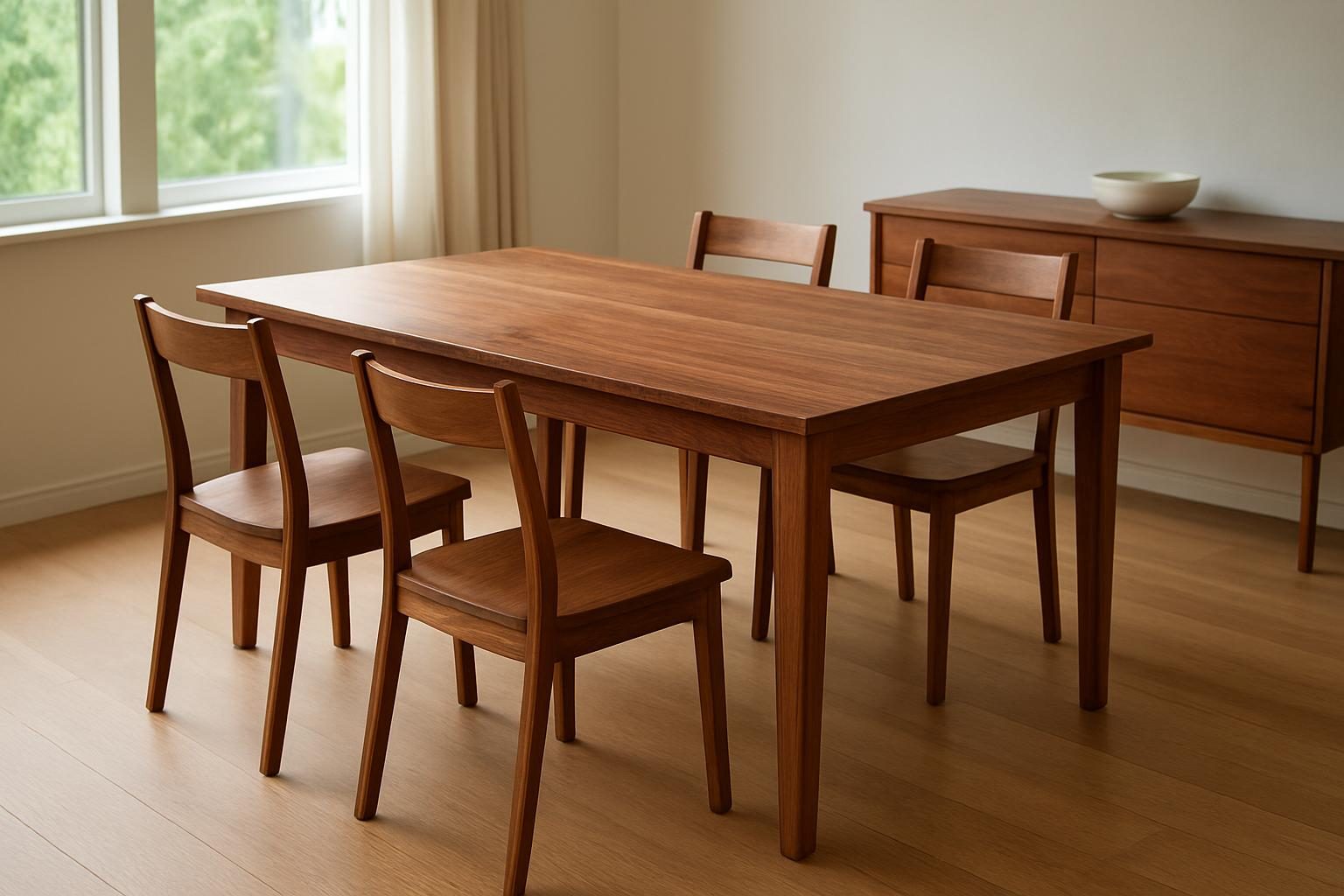
    Finished solid hardwood dining table in a sunlit dining room

    Finish and Care

    The finish protects the wood more than the species does. A hardwax oil or a durable film finish will resist rings and spills on either wood, and a table that is wiped down regularly and kept out of direct, constant sun will look good for a long time.

    Use coasters and trivets for hot dishes, and wipe spills rather than letting them sit. Walnut will show its life a bit sooner in the way of dents, while oak will show water marks sooner if neglected, so each has a small habit to keep.

    Shop tip: Put a sample board of each wood on your dining room floor or table for a few days. Look at it in morning light, evening light and under your actual fixtures before you decide; wood color shifts more than any photo suggests.

    You can compare these and other species side by side in our wood guide, and see how we build in how a commission works. If you want to see finished work first, browse our custom dining tables.

    FAQ

    Is walnut or white oak harder?

    White oak is harder, at about 1,360 lbf on the Janka scale versus roughly 1,010 lbf for black walnut. Both are well suited to daily dining use, and the difference mostly shows up in how easily each dents.

    Which is cheaper, walnut or white oak?

    White oak is usually cheaper per board foot, so a white oak table typically costs less than the same design in walnut. Exact pricing depends on size, thickness and base, which is why we give a fixed quote for each commission.

    Does walnut or white oak change color over time?

    Yes, both do. Walnut tends to lighten slightly with light exposure, while white oak tends to deepen toward a warmer honey tone. Keeping the table out of constant direct sun slows and evens out the change.

    When you are ready to choose a wood and size, request a quote at /commission/.