The short version
- Hard maple (1,450 Janka) is harder than black walnut (1,010 Janka), but both are safe for knives and both are closed-grain hardwoods suited to food.
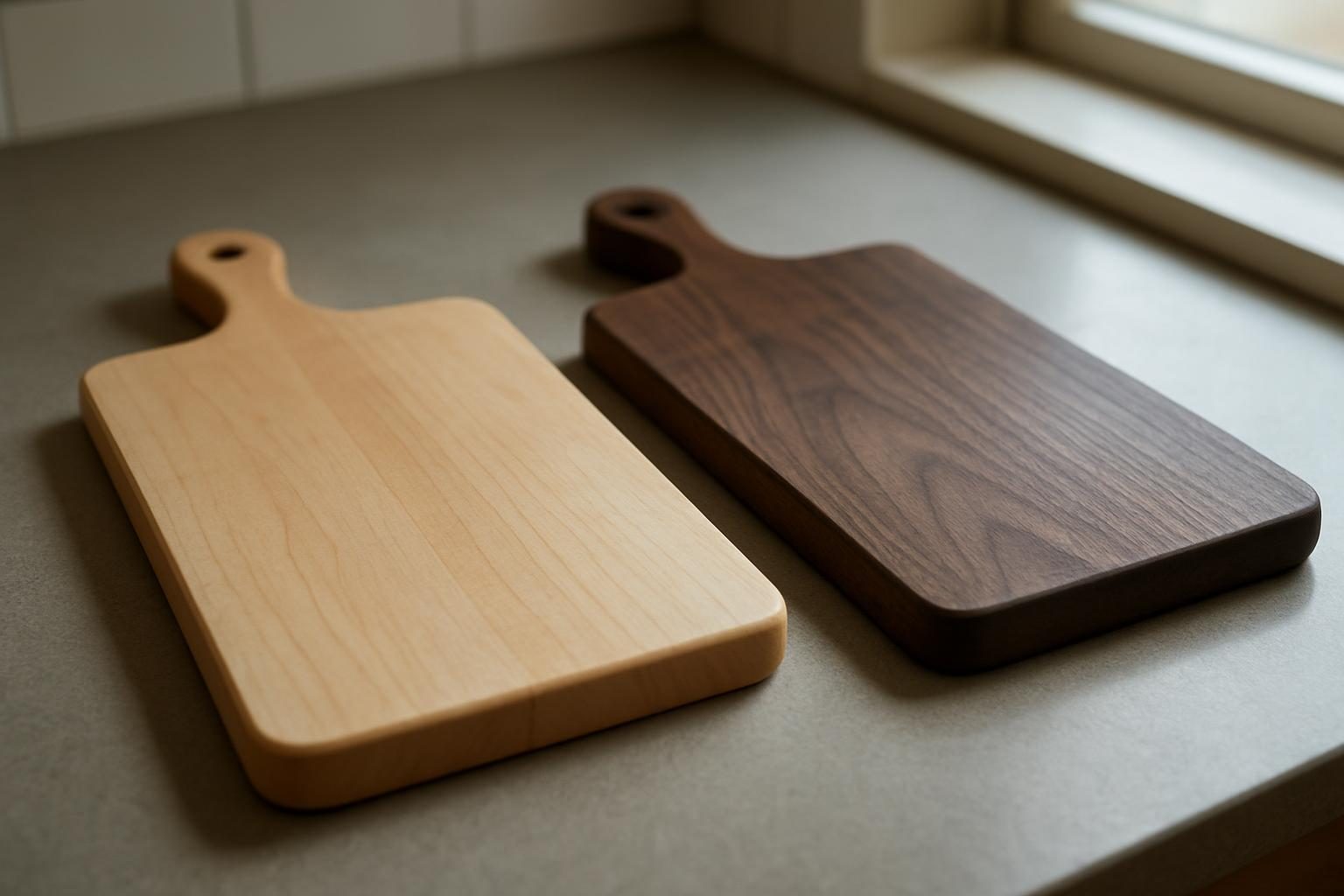
- Maple is pale and shows stains more. Walnut is dark brown and hides them, but it also hides crumbs and cut marks you may want to see.
- Walnut boards usually cost more than maple boards of the same size and construction because the lumber costs more.
- Neither wood is food-safe in a way the other is not. Oiling and cleaning habits matter more than the species.
- If you cannot decide, a maple and walnut combination board gives you both looks in one piece.
Maple and walnut are the two woods most people end up choosing between for a cutting board, and it is a fair contest. Both are dense, tight-grained North American hardwoods that have been used for chopping blocks for generations. The real differences are hardness, color, how each one handles stains, and price.
This is a straight comparison from a shop that builds boards in both. If you want the wider field of woods, including cherry and the ones to avoid, our guide to the best woods for cutting boards covers them.
Hardness: Maple vs Walnut on the Janka Scale
The Janka test measures how many pounds of force it takes to push a steel ball halfway into a piece of wood. Hard maple, also sold as sugar maple, rates about 1,450 lbf. Black walnut rates about 1,010 lbf.
In practice, that makes maple the tougher surface. It resists deep knife scoring and dents from a dropped pan better than walnut does. Walnut sits in a comfortable middle: hard enough to last for years, soft enough that it is gentle on your edge.
| Trait | Hard Maple | Black Walnut |
|---|---|---|
| Janka hardness | ~1,450 lbf | ~1,010 lbf |
| Grain | Closed, fine, even | Closed to semi-open, a bit more figure |
| Color | Cream to light tan | Chocolate to dark brown |
| Shows knife marks | Yes, in light scratches | Less visible |
| Shows food stains | More | Less |
| Relative price | Lower | Higher |
Hardness gets overplayed in cutting board conversations. A knife is steel, and both woods are far softer than steel. The bigger factor for edge life is whether the board is end grain or edge grain, which we compare in end grain vs edge grain cutting boards.
How They Look and Age
Maple is the clean, bright option. It has a fine, even grain that reads as modern and neutral, and it pairs well with white countertops and light cabinetry. Over time it warms to a soft honey tone, especially with regular oiling.
Walnut is the dramatic one. The color runs from medium brown to near-black, sometimes with purple or gray streaks and occasional lighter sapwood. It looks rich on a dark countertop and holds up visually in a busy kitchen.
Walnut does lighten slowly with sun exposure, so a board that lives on a sunny counter will shift a little over the years. Maple tends to move the opposite direction, deepening to a warmer tone. Neither change is a defect, just wood being wood.
Pick maple if you want to see the board work, and walnut if you want the board to look good while it works.
Staining: Which One Shows Wear Less?
This is where the two woods feel most different day to day. Maple is pale, so beet juice, turmeric, red wine and coffee leave visible marks. They are surface stains and usually fade or sand out, but they do show.
Walnut hides most of that. A dark board can sit through a week of tomato sauce and berry prep and still look uniform. The tradeoff is that you also lose the contrast that shows when a board needs a proper wash, so build a cleaning habit instead of waiting for it to look dirty.
For both woods, the same basics keep a board healthy:
- Wash with mild soap and warm water right after use, then dry it standing on its edge.
- Never soak a board or run it through the dishwasher.
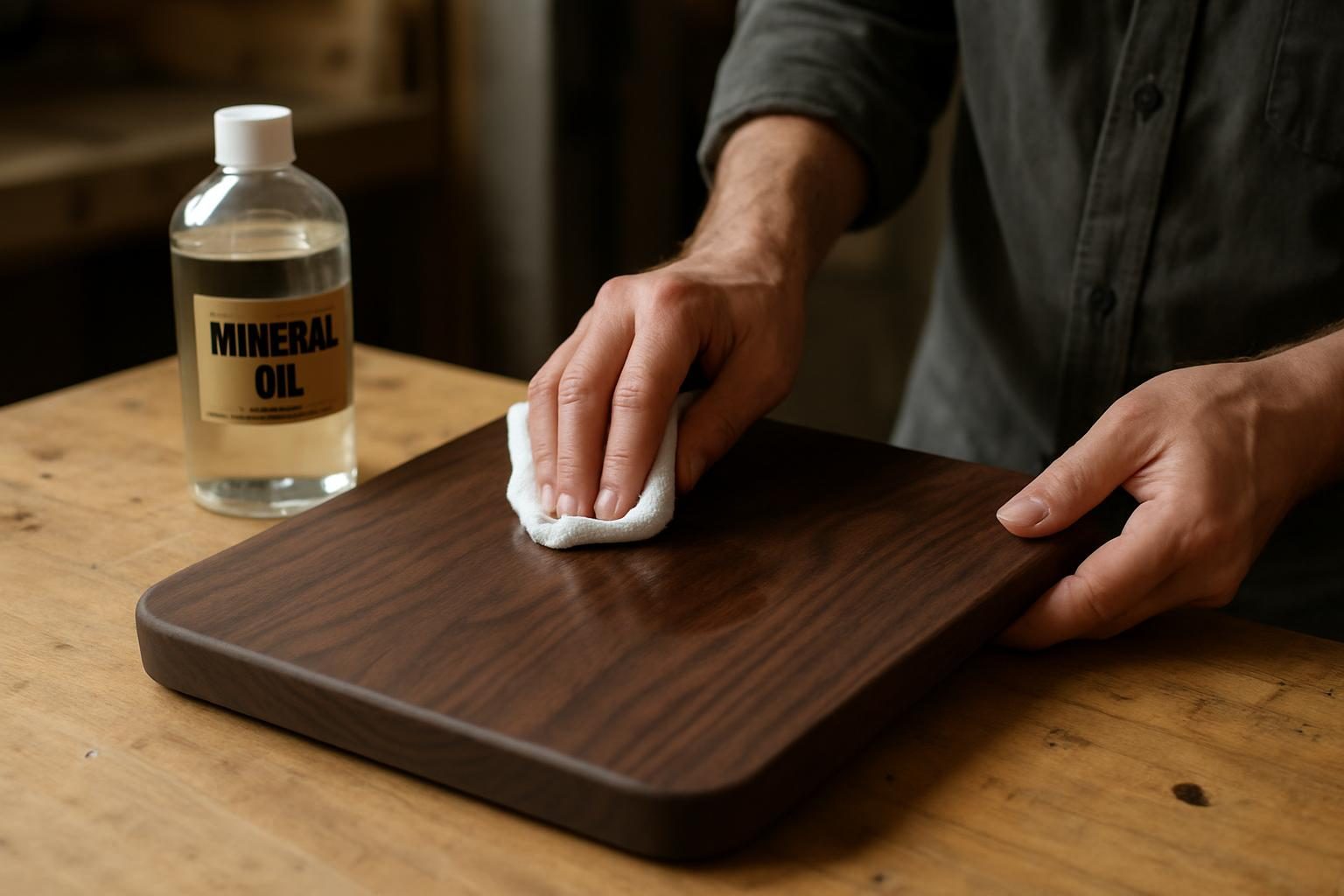
- Oil it with food-grade mineral oil whenever it looks dry or pale.
- Sand lightly and re-oil if a stain bothers you.
Our walkthrough on how to oil and clean a wood cutting board has the full routine.
Should You Stain a Cutting Board?
Short answer: no. Wood stains and dyes are not made for surfaces that touch food and take knife cuts, and a cutting board gets sanded and re-oiled over its lifetime, which exposes bare wood again. Skip any finish that is not labeled food-safe.
If you want a darker board, buy walnut instead of staining maple. It gives you depth of color that runs all the way through the wood, so a scratch never reveals a pale layer underneath. That is the honest reason people choose walnut over maple, and it is a good one.
The only finish a cutting board needs is a food-safe oil, sometimes paired with a beeswax blend for a bit more water resistance. Both woods take oil well and look noticeably richer after the first few coats.
Price and Build Differences
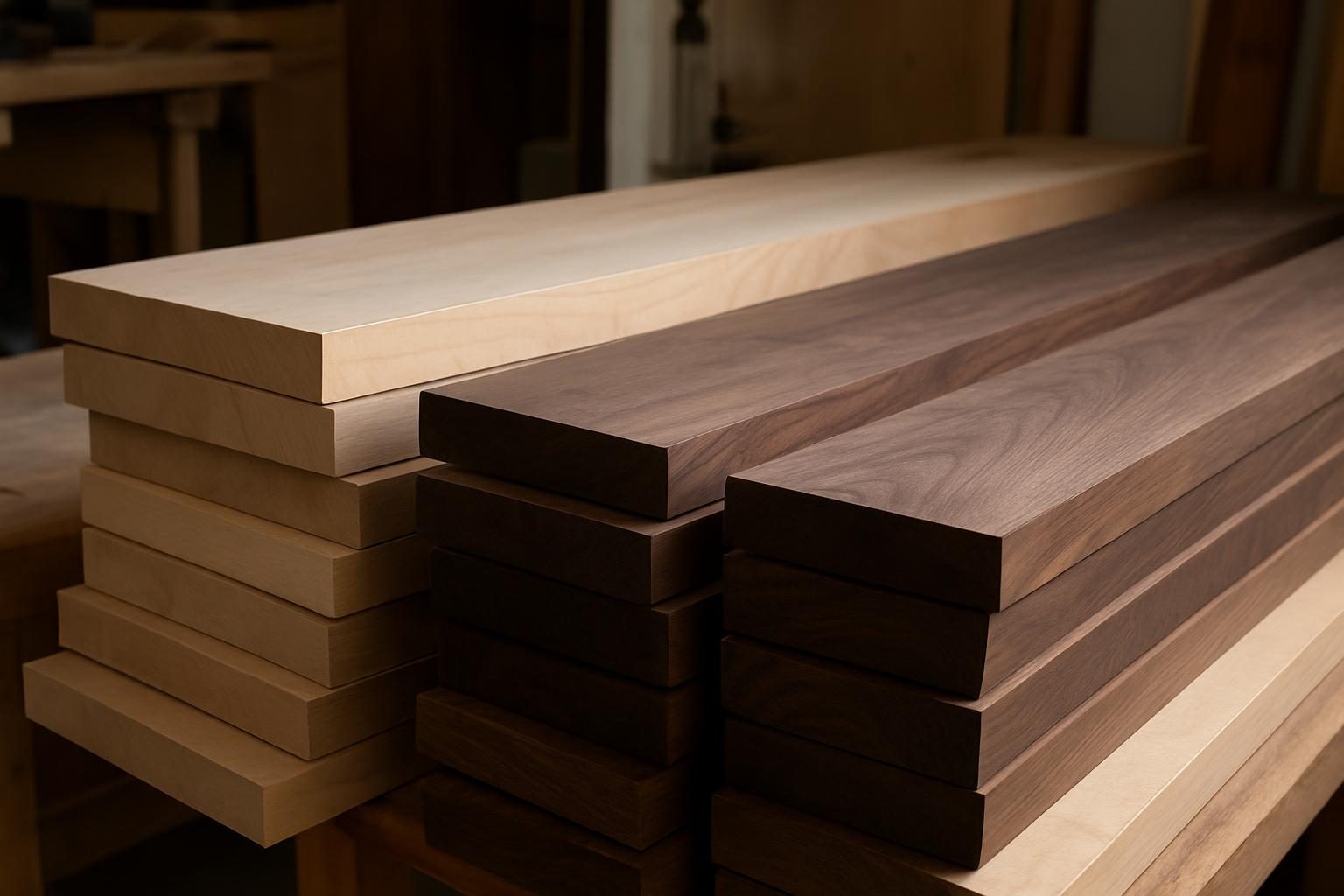
Walnut lumber costs noticeably more than hard maple, and that carries through to the finished board. Our cutting boards start at $95, and walnut versions of the same size and construction generally land above the maple ones. Board size, thickness, and whether it is edge grain or end grain move the price more than the species does.
Thickness is worth caring about. A board around 1.5 inches thick stays flat, resists warping, and has some heft on the counter. Thinner boards are lighter but more likely to cup if they get wet on one side.
Here is a quick guide to which wood tends to suit which situation:
- Busy family kitchen, lots of daily chopping: Maple. It is the tougher surface and the lower price makes it easy to replace in ten years.
- Serving boards and charcuterie: Walnut. The dark color shows off cheese, fruit and cured meat.
- Gift: Walnut or a combination board. It photographs well and feels like an upgrade.
- Dark countertops and cabinets: Maple for contrast, or walnut for a tonal look.
The best cutting board is the one you will actually wash, dry and oil.
Which One We Would Pick
For a primary chopping board that sees daily use, hard maple is the practical choice. It is harder, cleaner looking, and easier on the budget. For a board that sits out on the counter and doubles as a serving piece, walnut earns its higher price.
Both are safe for food and both will last for years when cared for properly. If you are weighing walnut against another popular furniture wood, our comparison of walnut vs white oak is a useful companion, and the shop’s wood guide lays out the species side by side. You can see current options on our cutting boards page.
Boards ship anywhere in the US. If you are in Jacksonville or elsewhere in Onslow County, we also handle local pickup, which is easy to arrange if you are ordering furniture alongside a board.
FAQ
Is maple or walnut better for a cutting board?
Neither is better across the board. Maple is harder and cheaper, which suits heavy daily chopping. Walnut is darker, hides stains better, and looks richer as a serving board. Both are tight-grained hardwoods that are widely used for food surfaces.
Is walnut safe for cutting boards?
Yes. Black walnut is a standard cutting board wood and is considered safe for food contact. People with tree nut allergies should be cautious with any walnut board, so mention it if you are gifting one or cooking for someone with a nut allergy.
Will a maple cutting board stain?
It can. Pale maple shows pigments from beets, turmeric, berries and wine. These are usually surface marks that fade with washing or come out with a light sanding and fresh oil, so they are cosmetic rather than a sign of damage.
If you are ready to choose a wood, size and style, request a quote at /commission/.