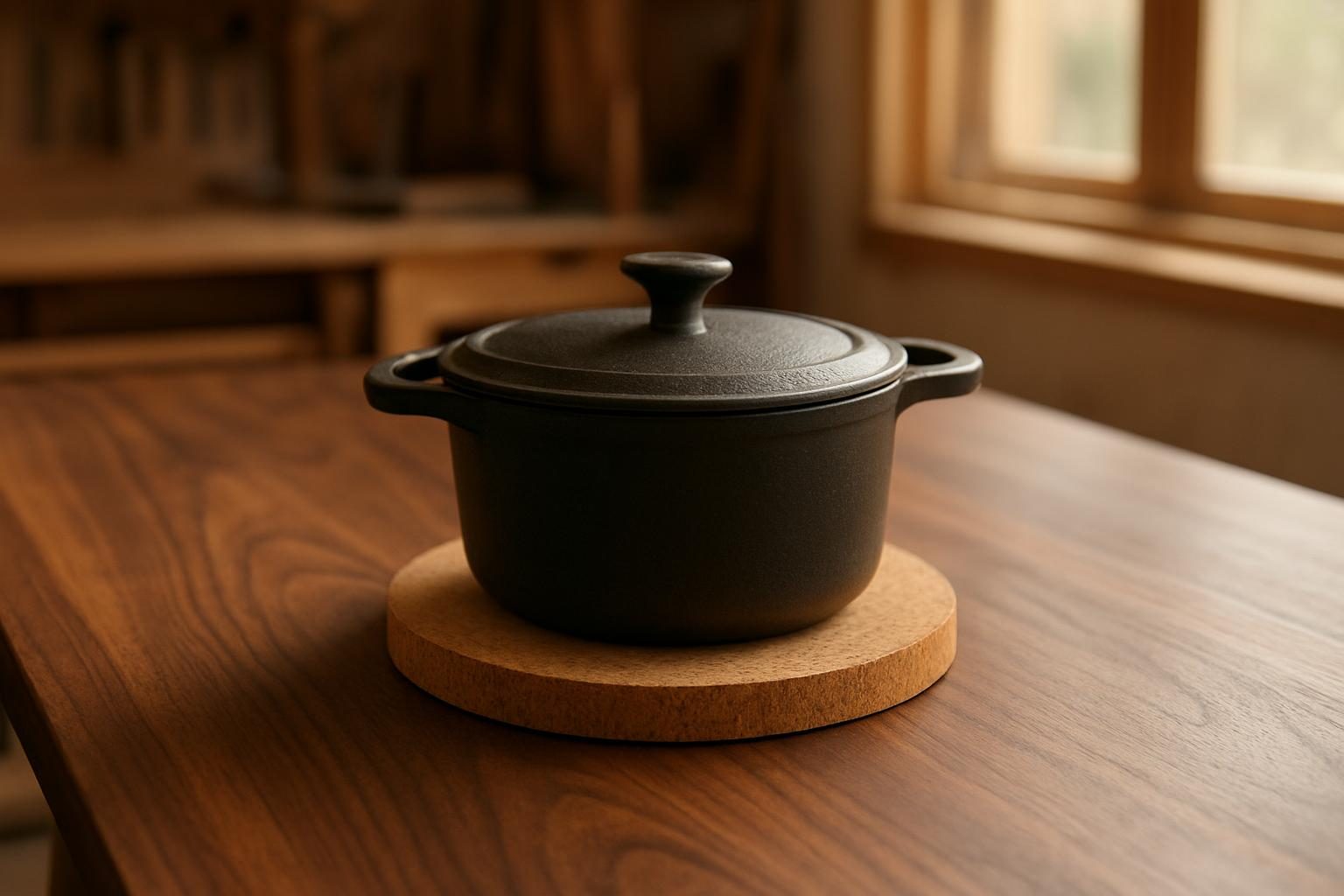
Category: Care & Maintenance

  • How to Protect a Wood Table from Heat, Scratches and Spills

    How to Protect a Wood Table from Heat, Scratches and Spills

    A good wood table is meant to be used. Still, a hot casserole dish, a wet glass or a dragged fork can leave a mark that stays for years if the finish isn’t up to the job or you skip a few simple habits.

    This guide covers what actually protects a wood table from heat, scratches and spills, and what is mostly marketing. The advice comes from finishing and repairing tabletops in a small shop, so it leans practical.

    The short version

    • No wood finish is truly heatproof. Anything much hotter than about 150°F can mark a finished tabletop, and a pot straight off the stove runs well past that.
    • A trivet or pad with real thickness (at least 1/4 inch) and a felt or cork underside does more than any finish can.
    • Spills become damage when they sit. Wipe within a few minutes and you will rarely have a problem.
    • Choose your finish for how you live: polyurethane resists water and heat best, hardwax oil is easiest to repair.
    • Hardness helps with dents, but it does not make a table heatproof or stainproof.

    Why Heat Damages a Wood Table

    Heat does not usually hurt the wood itself. It hurts the finish sitting on top. A hot dish softens the film, traps moisture underneath, and leaves a white cloudy ring or, with enough heat, a dull or blistered patch.

    Most of the damage comes from three sources: a pot or pan straight off the burner, a hot casserole dish out of a 350°F oven, and a mug or plate of something steaming sitting in one spot. A cold glass can cause a similar white ring from condensation, which is a moisture problem rather than a heat one.

    The key point is that a finish slows damage, it does not prevent it. A well-built film finish can tolerate a warm plate or a cup of coffee. It will not tolerate a Dutch oven placed straight on the surface.

    The best protection is the cheapest: something thick between the hot dish and the wood.

    Trivets, Pads and Placemats That Actually Work

    Not every trivet earns its place. A thin silicone mat or a decorative tile with no insulation can pass heat straight through. What matters is thickness, insulation and a surface that will not scratch the wood underneath.

    Here is how common options compare:

    OptionHeat protectionNotes
    Cork trivet (3/8 to 1/2 in.)GoodLight, cheap, insulates well. Wears down over time.
    Thick silicone trivetGoodHandles hot pots. Check the underside is smooth and clean.
    Wood trivet with feetGoodRaises the dish off the table so heat does not sit against the finish.
    Thick felt-backed pad (1/4 in. or more)Good to very goodBest for large dishes and a full table cover.
    Thin silicone mat or cloth placematPoor to fairFine for warm plates, not for hot cookware.
    Ceramic tile, no backingFairHolds heat and can scratch a finish if the base is rough.

    Check the underside of anything you set on the table. A rough ceramic base or a dirty trivet will scratch a finish as easily as a fork. Wipe the bottom before it goes on the wood.
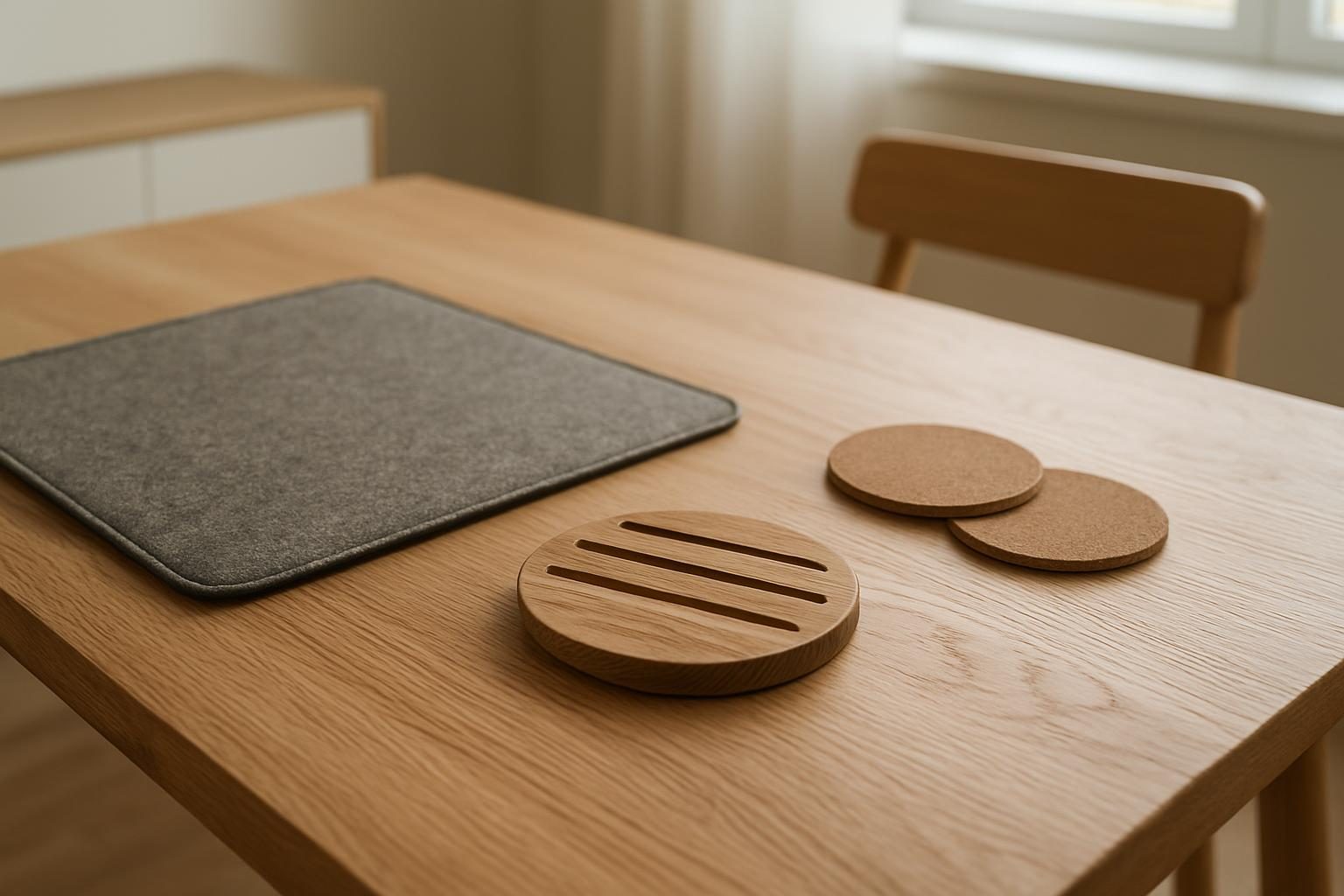
    Felt-backed table pad and coasters laid out on a finished oak tabletop

    Table Pads and Covers: Worth It?

    A full custom table pad, the kind with a felt or flannel backing and a heat-resistant top, is the most complete protection you can buy. They are popular for tables that double as homework stations, craft tables or holiday serving surfaces. The tradeoff is that you cover the wood you paid for.

    One caution: avoid leaving rubber-backed mats or plastic table covers on a finished tabletop for long stretches. Some of them react with the finish and leave a sticky residue or a ghost pattern. A felt-backed pad or a breathable fabric cover is the safer choice.

    For most households, a smarter plan is a few good trivets kept near the stove, plus coasters at every seat. That covers 95 percent of the risk without hiding the table.

    Protect the spots where hot and wet things actually land, and leave the rest of the wood to be seen.

    How Finish Choice Changes Everything

    The finish is your table’s built-in defense, and the two common choices behave differently. We compare them in detail in Hardwax Oil vs Polyurethane: Choosing a Table Finish, but here is the quick version for heat and spills.

    • Polyurethane forms a hard film on the surface. It resists water, spills and everyday heat well, which makes it a good fit for a family table. The downside is that a deep scratch or heat mark is harder to blend, and repairs often mean refinishing a whole section.
    • Hardwax oil soaks into the wood and leaves a natural, low-sheen surface. It is less resistant to standing water and heat, but scratches and marks can usually be spot repaired with a light sanding and a fresh coat. It is more forgiving to repair and less forgiving to neglect.

    Neither one is wrong. If your table will see heavy daily use and you want the most resistance, polyurethane tends to win. If you want a repairable, natural feel and you are willing to be a little more careful, hardwax oil is a strong choice.

    Spills and Moisture: The Five-Minute Rule

    A spill on a sealed table is rarely a problem if you deal with it quickly. The trouble starts when liquid sits for an hour or overnight and works its way past the finish. Water, wine, oil and coffee all do this at different speeds.

    Wipe up spills within a few minutes with a soft cloth, then dry the spot. Do not leave a wet rag or a sweating pitcher on the surface. A standing ring from a cold glass is the most common mark we see, and coasters prevent almost all of them.

    If a white ring does appear, do not panic. Most are trapped moisture in the finish and can often be lifted gently. Our guide to removing water rings and white marks from a wood table walks through what to try first.
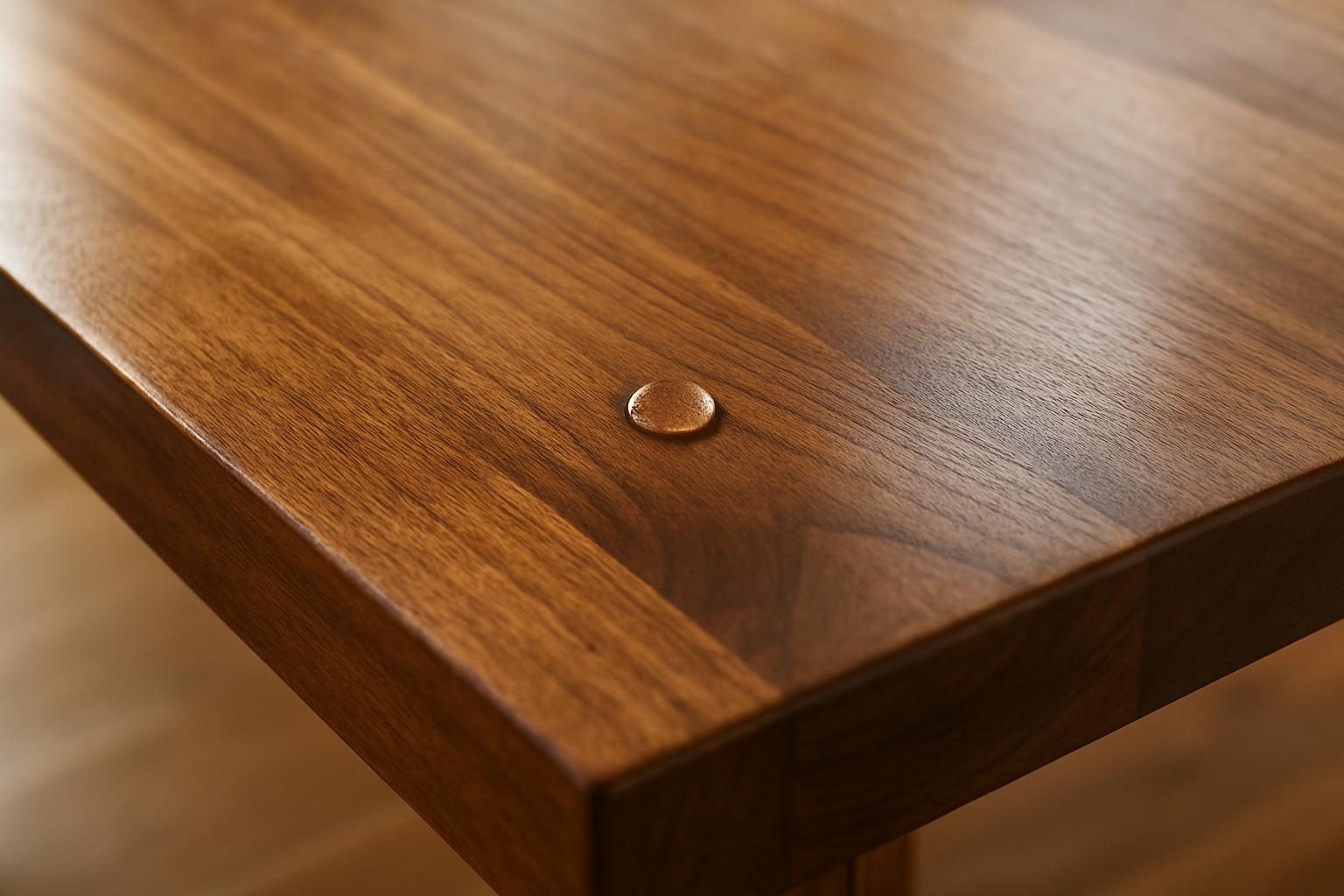
    Close-up of a hand-rubbed satin finish on a solid hardwood table surface

    Scratches, Dents and Wood Hardness

    Scratches and dents are a different problem from heat, and hardness plays a bigger role here. Hardness is measured on the Janka scale, which records how many pounds of force it takes to press a steel ball into the wood. Higher numbers resist dents better.

    As a rough guide, black walnut sits around 1,010 lbf, cherry around 950, white oak around 1,360 and hard maple around 1,450. A harder species will dent less when someone drops a heavy mug or a child leans on a pencil, though no wood is dent-proof. Our wood guide compares the common species side by side.

    For everyday scratch prevention, a few habits go a long way:

    • Put felt pads on the feet of anything that sits on the table, such as lamps, centerpieces and serving trays.
    • Lift dishes and cookware rather than sliding them across the surface.
    • Keep a soft cloth under laptops, tablets and anything with a rough base.
    • Use a table pad when kids are doing homework or crafts with pens, scissors or glue.
    Shop tip: Keep two or three trivets in a drawer next to the stove or oven, not in a cabinet across the room. If the trivet is within arm’s reach, people use it. If it is in another room, the hot dish goes straight on the wood.

    Everyday Care That Keeps the Finish Working

    Protection is easier when the finish is healthy. Clean the table with a barely damp soft cloth, dry it right away, and avoid harsh cleaners, sprays with ammonia or anything abrasive. Keep the table out of direct sun and away from heating vents, which dry the wood and stress the finish.

    Solid wood also moves with the seasons, which is why good construction matters as much as the finish. Details like breadboard ends help a top stay flat so the finish is not fighting a warping surface. For a fuller routine, see how to care for a solid wood dining table.

    If you are local, we build and deliver tables around Jacksonville and across Onslow County, including Hubert, Swansboro, Sneads Ferry and Richlands. A table that suits its home and its habits is the easiest one to protect.

    FAQ

    What temperature will damage a wood table?

    Finishes start to soften and mark somewhere above about 150°F, though it depends on the finish and how long the heat sits. A pot off the stove or a casserole out of the oven is far hotter than that. Always put a trivet or pad underneath.

    Can I put a hot coffee mug on a wood table?

    A warm mug on a well-finished table is usually fine for a short time, but a steaming one left in the same spot can leave a ring. Using a coaster is the simple fix and costs almost nothing.

    Is polyurethane or hardwax oil better for protecting a table?

    Polyurethane resists water, spills and heat better, so it suits busy family tables. Hardwax oil is easier to spot repair and has a more natural feel. The right choice depends on how you use the table and how you feel about maintenance.

    If you would like a table finished and built for the way your household actually lives, you can request a quote and we will talk through species, finish and size.

  • How to Remove Water Rings and White Marks from a Wood Table

    How to Remove Water Rings and White Marks from a Wood Table

    A water ring looks like a disaster, but most of them are fixable in under an hour with things already in your house. The trick is knowing which kind of ring you have and what finish is on the table, because the wrong fix on the wrong finish turns a small blemish into a refinishing job.

    The short version

    • White or cloudy rings are moisture trapped in the finish. They are usually fixable without sanding.
    • Dark or black rings mean water got through the finish into the wood. Those need more work.
    • Start gentle: a dry cloth, then low heat, then a mild abrasive. Escalate only if the mark stays.
    • Never use bleach, steel wool on a film finish, or a wet cloth with an iron. Each makes things worse.
    • Hardwax oil finishes spot-repair easily. Polyurethane and lacquer are less forgiving.

    First, Diagnose: White Ring or Dark Ring?

    Look at the mark in good light. A white, hazy, or cloudy ring that sits on the surface is moisture caught in the finish layer. The wood underneath is usually fine.

    A dark gray or black ring is different. That is water that soaked through the finish into the wood fibers, where it reacts with the tannins in species like oak and walnut. It cannot be rubbed out of the finish, because it is no longer in the finish.

    Press a fingernail lightly across the mark. If the ring is smooth and only looks cloudy, it is in the finish. If the wood feels raised or rough, water has gotten in and the grain has swelled.

    Know Your Finish Before You Touch It

    Everything below depends on the finish, so figure that out first. A quick test: put a drop of water on an out-of-the-way spot, like the underside of a leaf or the back of a leg. If it beads up and sits there, you have a film finish. If it darkens the wood within a few minutes, you likely have an oil finish.

    • Polyurethane or varnish: a hard, plastic-like film. Glossy to satin, feels like a skin on the wood.
    • Lacquer or shellac: a thinner film, common on older furniture. Shellac is the most heat and alcohol sensitive of the group.
    • Hardwax oil or penetrating oil: no film. The wood feels like wood, with a low sheen. We cover the tradeoffs in hardwax oil vs polyurethane.

    The finish decides the fix, so identify it before you reach for anything.

    White Rings on Polyurethane, Lacquer or Shellac

    Work from least aggressive to most, and stop the moment the ring fades. Wipe the area clean and dry first.

    Step 1: Wait. Fresh white rings sometimes disappear on their own as trapped moisture evaporates. Give it a day before you do anything.

    Step 2: Low heat. Hold a hair dryer on low about 6 to 8 inches above the mark, moving constantly, for 30 to 60 seconds. The warmth helps the trapped moisture escape. Do not use high heat and do not hold it still, because you can blister the finish.

    Step 3: Mild abrasive. Mix equal parts non-gel white toothpaste and baking soda, rub gently with a soft cloth along the grain for about a minute, then wipe clean. This is a very fine polish, and it works on many fresh rings.

    Step 4: Mayonnaise or petroleum jelly. Spread a thin layer on the ring, leave it for several hours or overnight, then wipe off. The oil can displace moisture in the finish. Results vary, but it is harmless, so it is worth a try.

    Shop tip: Test any method on a hidden spot first, like the underside of the tabletop. Shellac in particular can dissolve with alcohol-based products and soften under heat, so on an older table, skip the hair dryer and go straight to the gentle polish.
    Hair dryer held above a wood tabletop to gently warm a white water ring

    White Rings on an Oil Finish

    Oil finishes are the easy case. There is no film to protect, so you can treat the wood directly. Lightly sand the ring with 320-grit paper along the grain, just until the whitening is gone, then wipe off the dust.

    Apply a thin coat of the same oil or hardwax oil, let it soak in for the time on the can, and wipe off all the excess. Feather the edges of the repair outward so it blends with the surrounding wood. Let it cure fully before putting anything back on the spot.

    This is the main reason we like oil finishes on tables that get daily use. A scuff, ring, or scratch is a local repair, not a full strip and refinish. Our guide to caring for a solid wood dining table covers routine upkeep that keeps those repairs small.

    On an oiled table, a water ring is a ten-minute repair, not a refinish.

    Dark Rings: When Water Reached the Wood

    A black ring means the damage is below the finish, and you have to get to the wood to fix it. On an oil finish, sand the ring out with 150-grit, then 220, working along the grain. Stained areas in oak and walnut may lighten but not vanish completely.

    For a stubborn dark stain on bare or sanded wood, oxalic acid (sold as wood bleach) can reverse the iron-tannin reaction. Mix it per the package, brush it on, let it work, neutralize, and let the wood dry before re-oiling. Wear gloves and eye protection, and follow the label, since it is a real chemical.

    On a film finish, a dark ring usually means the finish has to be locally stripped or the whole top refinished to get a clean result. A spot repair on polyurethane often shows as a patch. If the table is a good one, this is the point to consider a professional refinish rather than a DIY attempt.

    Species matters here too. Dense hardwoods like white oak and walnut resist water better than soft ones, though neither is waterproof. Our walnut vs white oak comparison goes into how each handles daily wear.

    Fine sandpaper and a cloth beside a can of hardwax oil on a white oak tabletop

    What Not to Do

    Most of the bad outcomes come from people reaching for something aggressive too early. These are the ones that turn a fixable mark into a bigger one:

    • Bleach or household cleaners. They can strip color and etch the finish, leaving a pale blotch bigger than the original ring.
    • Steel wool or coarse sandpaper on a film finish. You will scratch through the finish and leave a dull patch.
    • A hot iron over a damp cloth. It drives more moisture and heat into the wood and can scorch or lift the finish.
    • High heat from a heat gun. It can bubble polyurethane and soften shellac in seconds.
    • Wet scrubbing. Adding more water to a water problem just spreads it.
    • Furniture polish sprays with silicone. They can leave a residue that makes any later refinish or touch-up harder to bond.

    If you are in Jacksonville or anywhere in Onslow County, our humid coastal summers make this worse, since a damp glass sweating on a table does the damage faster than in a dry climate. Coasters are cheap insurance.

    Preventing the Next One

    Coasters and trivets solve almost all of it. Wipe up spills within a few minutes, and keep planters and hot dishes off bare wood. Re-oil an oiled top once or twice a year so water keeps beading instead of soaking in.

    If you are choosing a new table and know it will take real family use, the finish is worth deciding up front. Our posts on solid wood vs veneer explain why solid hardwood can be repaired and refinished in ways that thin veneer cannot. That repairability is a large part of what you are paying for.

    FAQ

    Does toothpaste really remove water rings?

    Sometimes, on fresh white rings in a film finish. Plain white, non-gel toothpaste acts as a very mild abrasive polish. It will not touch a dark ring, and it can dull the sheen if you rub too hard, so test it first and stay gentle.

    Why did the ring turn black instead of white?

    Black means water got through the finish and into the wood, where it reacts with natural tannins. This is common on oak and walnut. It requires sanding or oxalic acid treatment, not surface polishing.

    Can I fix a water ring without refinishing the whole table?

    Usually yes for white rings on any finish, and for most rings on an oil finish. Dark rings on polyurethane are the hardest to spot-repair invisibly, and sometimes a full refinish of the top gives the cleanest result.

    If you would rather start with a table finished to stand up to daily use, you can request a quote at /commission/.

  • How to Care for a Solid Wood Dining Table

    How to Care for a Solid Wood Dining Table

    The short version

    • Daily: wipe spills fast with a barely damp soft cloth, dry it, and use pads under hot dishes.
    • Monthly: dust, clean lightly, check the room’s humidity, and give the top a quick look for dry spots.
    • Yearly: re-oil or re-wax an oil-finished top, and rotate the table or its contents so light hits it evenly.
    • Keep indoor humidity roughly between 35% and 55% and keep the table away from vents and radiators.
    • Most scratches and rings on a solid wood top can be repaired. That is one of the real advantages over veneer.

    Why solid wood needs a little care at all

    Solid hardwood is a natural material that keeps taking on and giving up moisture for as long as it exists. A well-built table is designed to handle that movement, but the finish on top is what keeps spills, heat and grit from reaching the wood itself.

    Most of the care below is about protecting that finish and keeping the room reasonably stable. None of it is difficult, and none of it takes more than a few minutes. If you are still deciding between materials, our post on solid wood vs veneer furniture explains why the repairability is worth the small amount of upkeep.

    Daily care: the habits that do most of the work

    The single best habit is wiping spills when they happen. Water, wine, coffee and tomato sauce are all easy to deal with in the first few minutes and much harder after they have sat for an afternoon. Use a soft cotton cloth, wipe with the grain, and dry the spot right after.

    For everyday cleaning, a lightly damp cloth is enough. Wring it out until it feels barely wet, wipe, then follow with a dry cloth. Standing water is what causes trouble, not a quick wipe.

    • Use coasters under glasses, especially cold ones that sweat.
    • Use trivets or pads under hot dishes, pots and coffee carafes. A pan straight off the stove can mark even a hard finish.
    • Use placemats for meals and homework. Plates and cutlery drag grit across the surface.
    • Lift, don’t slide serving dishes, ceramic bases and anything with a rough underside.
    • Skip the plastic. Rubber and vinyl mats can trap moisture and react with some finishes over time.

    A finish protects the wood, but only if you keep water, heat and grit from sitting on it.

    What to clean with, and what to leave under the sink

    Plain water on a soft cloth handles most days. For a sticky patch, add a drop of mild dish soap to a bowl of water, wipe, then rinse the cloth and wipe again with clean water before drying. That is the strongest cleaner a dining table normally needs.

    Avoid anything with ammonia, bleach, vinegar-heavy mixes or heavy solvents. Also skip all-purpose sprays and disinfecting wipes, which can dull or soften the finish with repeated use. Silicone-based furniture polishes feel nice at first but build up a film that makes later re-oiling harder. If the table is going to be a family surface for decades, plain and gentle wins.

    Hand-applied oil finish being wiped onto a hardwood tabletop in a small woodshop

    Monthly care: humidity, dust and a quick inspection

    Once a month, dust the whole table, including the edges and the aprons underneath, then clean lightly as above. Run your hand across the top. If it feels dry, rough or looks pale in patches, the finish is getting thin there and it is time to think about re-oiling.

    This is also the time to look at the room. Wood moves with humidity, and the most common cause of cracks and cupping is a table sitting in a very dry or very damp environment. Aim for roughly 35% to 55% relative humidity, which a cheap hygrometer will tell you.

    • Keep it away from heat sources. Vents, radiators and fireplaces dry one side of the top faster than the other.
    • Watch direct sunlight. A strip of sun across the table will lighten or darken the wood depending on species, and it fades finishes.
    • Use a humidifier in winter if your heating drops the room below about 30%.
    • Use a dehumidifier or AC in humid months. Coastal North Carolina summers can push a closed-up house well past 60%.

    Yearly care: re-oil, re-wax and rotate

    Most of our tables are finished with a hardwax oil, which soaks into the wood rather than sitting on it like a plastic film. That is why they feel like wood, and also why they benefit from a refresh about once a year, or more often on a table that gets heavy daily use.

    To refresh the finish, clean and dry the top, then wipe on a thin coat of the same type of oil or a compatible maintenance oil. Let it sit for the time the label says, wipe off all the excess, and let it cure before putting anything on it. Thin coats beat thick ones every time, and wet rags used with oil should be laid flat to dry or soaked in water before disposal, because they can heat up and ignite.

    Shop tip: Do the oiling in the evening and leave the table clear overnight. Wipe off the excess after 15 to 20 minutes, not an hour later, or the surface will feel tacky and uneven.

    One thin coat of oil a year is cheaper than refinishing a table in ten.

    Fixing rings, scratches and dents

    Solid wood forgives mistakes in a way veneer can’t. Because the wood goes all the way through, you can sand and refinish a damaged area without cutting through a paper-thin surface layer.

    • White water rings: usually moisture trapped in the finish. Try a dry cloth and gentle warmth, such as a hair dryer on low held several inches away, then re-oil the spot.
    • Light scratches: rub in a little maintenance oil with a soft cloth. On oil-finished tops, the scratch often disappears as the oil darkens the exposed wood.
    • Deeper scratches: sand lightly along the grain with 240-grit paper, wipe clean, and re-oil the area.
    • Dents: a damp cloth and a warm iron can swell compressed fibers back up on many species. Test somewhere hidden first.
    • Burns and deep gouges: these need sanding and refinishing, sometimes the whole top for an even look.
    Solid wood dining table with coasters and a trivet protecting the finish during a meal setting

    Species make a difference

    Harder woods resist dents better. White oak sits around 1,360 on the Janka hardness scale, hard maple about 1,450, and black walnut about 1,010, so walnut will show a dropped fork more readily than maple will. None of those numbers means one is better, only that they wear differently.

    Walnut and cherry also change color with light exposure, usually darkening or warming over the first year. If you want a side-by-side look at how species behave, our wood guide compares them, and the post on walnut vs white oak goes deeper on those two. The same care routine applies to our custom dining tables, and it scales down to coffee tables, benches and desks.

    Moving, storing and living with the table

    When you move a solid wood table, lift it rather than dragging it, and take the top off the base if it is designed to come off. Wrap it in blankets, not plastic. Plastic wrap traps moisture and can mark an oil finish.

    If you ever store a table, keep it indoors in a climate-controlled space, off the floor, and out of garages or sheds where humidity swings are large. For households in Jacksonville, Hubert, Swansboro, Sneads Ferry, Richlands and around Camp Lejeune, the main thing to watch is summer humidity in a house that sits closed up during a deployment or a long trip. Keep the AC running at a moderate setting rather than shutting it off completely.

    FAQ

    Can I use furniture polish on a solid wood dining table?

    It is better not to. Aerosol and silicone polishes leave a film that attracts dust and can make later re-oiling uneven. A thin coat of the right maintenance oil once a year, and a damp-then-dry cloth the rest of the time, does the job without buildup.

    How often should I oil a solid wood table?

    For an oil-finished dining table, about once a year is a good starting point, or when the top starts to look dry or feels rough. Heavily used family tables may want it every six months. Tables with a harder film finish need re-oiling less often, but they still benefit from clean, gentle care.

    Is it normal for a solid wood table to move or crack slightly?

    Small seasonal movement is normal, since wood swells and shrinks with humidity. A well-built table allows for that movement in how the top is attached. Large cracks or cupping usually point to a very dry room, direct heat or sudden humidity swings, which are worth correcting.

    If you are thinking about a table built to last with this kind of care, request a quote at /commission/.