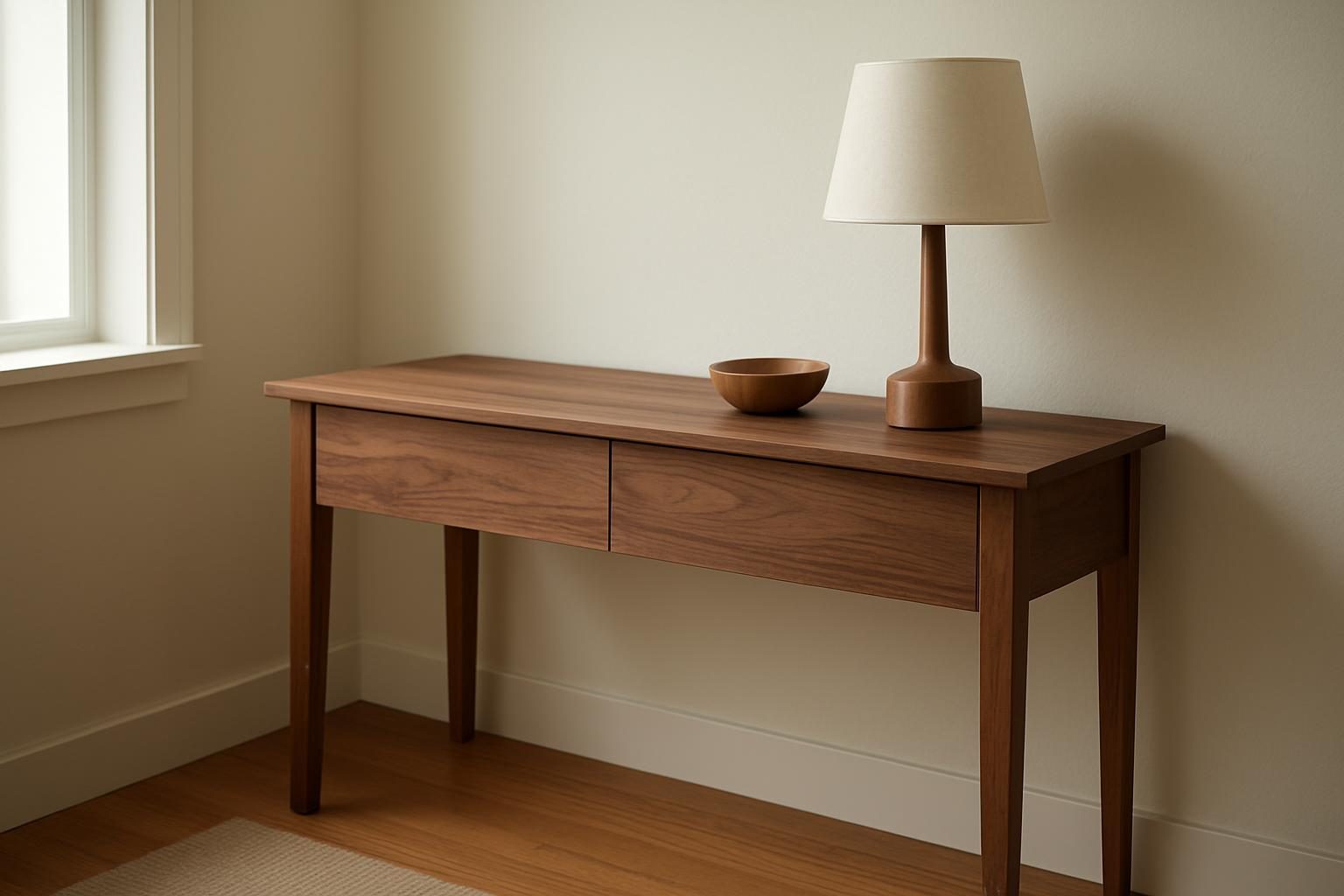
A console table is a narrow piece, and that is exactly why size matters so much. Two inches too deep and it blocks a front door. Two inches too tall and it looks wrong against the back of a sofa.
This guide covers console table size for the three places they usually live: the entry, behind the sofa and under a media wall. The numbers below are the ones we work from when we build, and they are a starting point you can adjust to your room.
The short version
- Entry consoles run 30 to 34 inches tall and 10 to 14 inches deep, so they do not crowd a doorway.
- Behind a sofa, match the table to the sofa back: usually 1 to 3 inches lower than the top of the cushions, 12 to 16 inches deep.
- Media consoles sit low, around 18 to 26 inches tall, and should be a little wider than the TV.
- Leave at least 36 inches of walkway in front of an entry console and 30 inches around a sofa console.
- Length is the easiest dimension to flex; height and depth are the ones that make or break the fit.
What counts as a console table
A console is a long, shallow table meant to sit against a wall or the back of furniture. It is not a desk and not a sideboard, although the three overlap at the edges. The defining feature is depth: most consoles are under 18 inches front to back.
That shallow footprint is the whole point. It gives you a surface for keys, a lamp or a few books without eating floor space. Because the footprint is small, small changes in dimension are very visible.
Before picking numbers, decide the job. The same 48-inch table that works as an entry piece will be wrong behind a sofa, and wrong again under a television.
Entry console table size
For an entry, height is usually 30 to 34 inches, which lines up with counter-height comfort for dropping keys or sorting mail. Many people land at 32 to 34 inches because it is easy to reach without bending.
Depth is where entries go wrong. In a tight hall or foyer, 10 to 12 inches is comfortable, and 14 inches is about the upper limit unless the space is generous. A 16-inch-deep table in a 42-inch hall leaves less room than you think once you add a person carrying groceries.
Length depends on the wall, but a good rule is to leave 6 to 12 inches of wall on each side so the table does not look jammed into a corner. A 36 to 48 inch table suits most entries; a long hallway can take 60 inches or more.
- Height: 30 to 34 inches
- Depth: 10 to 14 inches
- Length: 36 to 60 inches, depending on the wall
- Clearance in front: 36 inches minimum for walking
Depth, not length, is the dimension that decides whether an entry table feels welcoming or in the way.
Console table behind a sofa
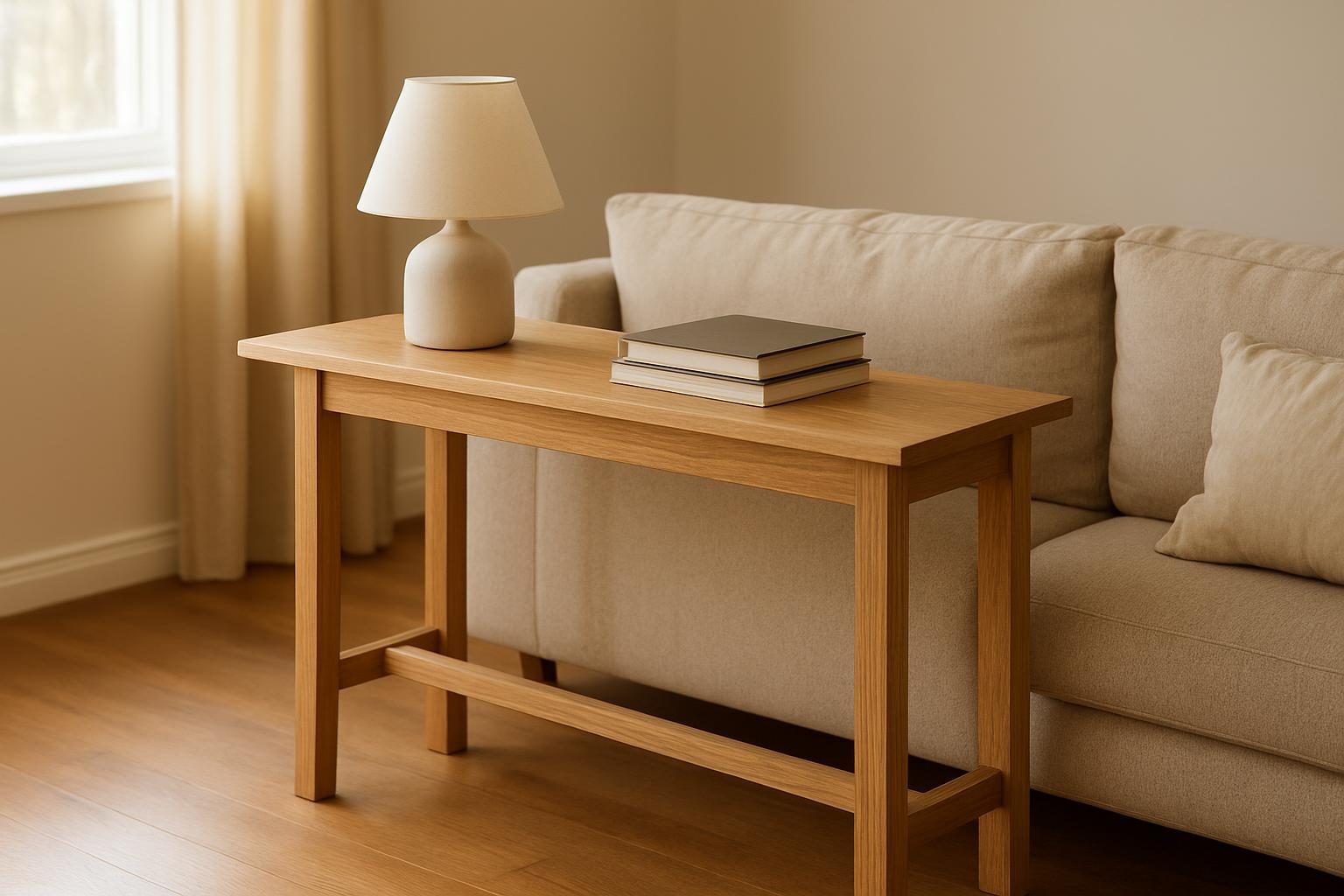
A sofa console has a different rule: it should relate to the sofa, not to the room. The table top generally sits 1 to 3 inches below the top of the sofa back, so a lamp or a stack of books reads as part of the arrangement instead of a barrier.
Most sofa backs land between 30 and 36 inches, which puts a sofa console at roughly 28 to 34 inches tall. Measure your own sofa from the floor to the top of the back cushion, then subtract 1 to 3 inches. Do not guess from a catalog photo.
Depth is typically 12 to 16 inches. Go deeper and people start bumping their shoulders on it when they walk behind. Length should be a little shorter than the sofa, often 6 to 12 inches shorter, so the table looks tucked in rather than overhanging.
Leave about 30 inches between the back of the sofa and any wall or furniture behind the table if people walk through. Where nobody passes, you can tighten that, but the table still needs a few inches of air so it does not scrape the sofa.
Media console table size
A media console works from the opposite direction. The goal is to keep the TV near eye level when you are seated, so the table is low: about 18 to 26 inches tall for most living rooms. With a typical 18-inch sofa seat height, the center of the screen should land roughly 40 to 42 inches off the floor.
Depth runs 14 to 20 inches, deeper than other consoles, because it has to carry a TV stand or soundbar and sometimes a small box of cables. If you mount the TV on the wall, you can go shallower and use the table for storage and display.
Width matters here. The table should be at least as wide as the TV, and ideally 6 to 12 inches wider, so the screen does not look like it is falling off the edges. A 55-inch TV is about 48 inches wide, so a 54 to 60 inch table fits it well.
Plan for ventilation and cord routing. Leave a gap or a cutout at the back so cables and heat have somewhere to go, and keep any shelf below the table clear of the TV base.
Console table size at a glance
| Use | Height | Depth | Typical length |
|---|---|---|---|
| Entry | 30 to 34 in | 10 to 14 in | 36 to 60 in |
| Behind sofa | 28 to 34 in | 12 to 16 in | 6 to 12 in shorter than sofa |
| Media | 18 to 26 in | 14 to 20 in | 6 to 12 in wider than TV |
Treat these as ranges, not rules. A tall person, a low sofa or an unusual doorway will push you to one end of the range or just outside it.
Measure the furniture the table has to live next to, not just the wall it stands on.
How to measure before you order
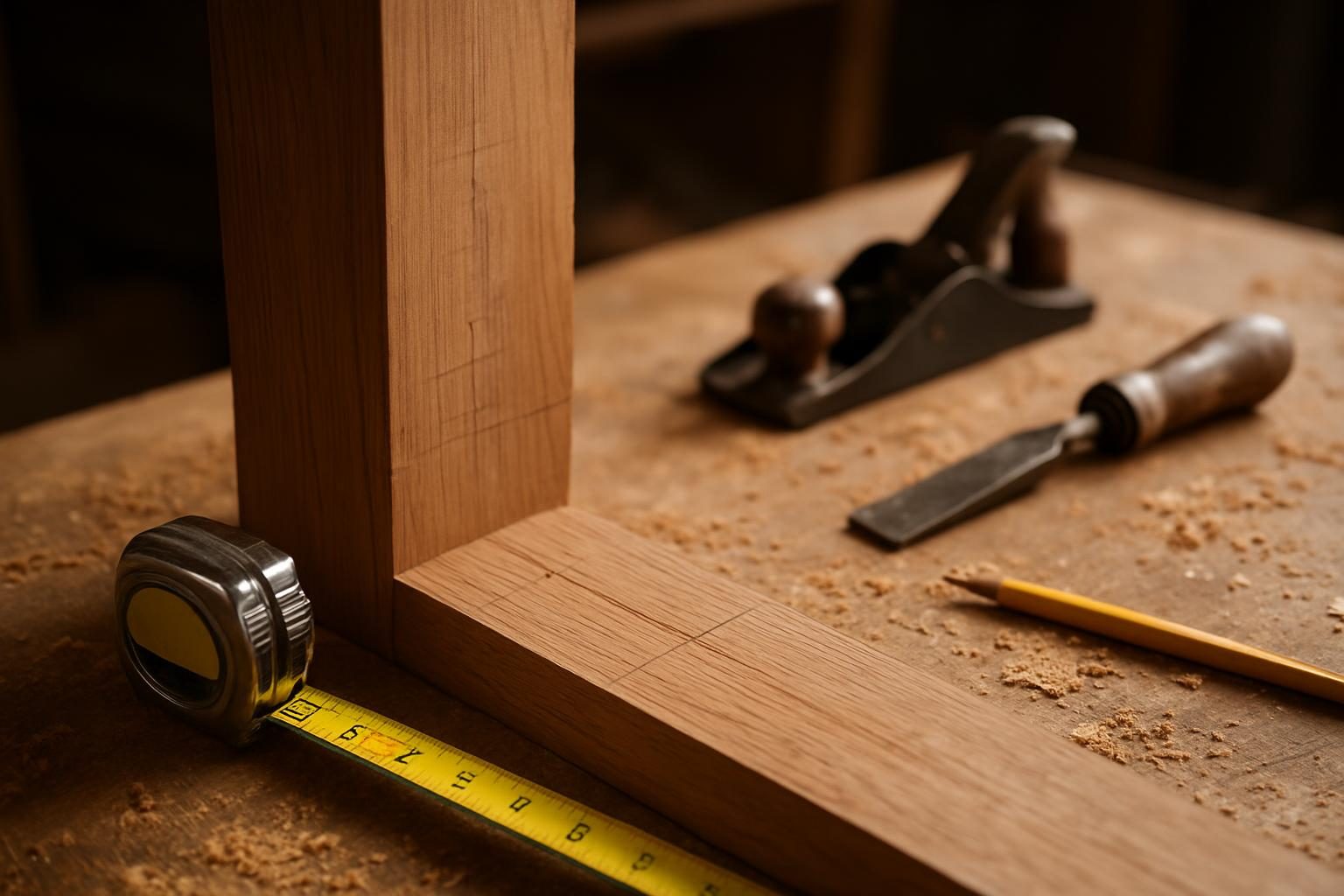
Start with the wall or the sofa, then work outward. Use painter’s tape to mark the table’s footprint on the floor at your planned length and depth. Walk around it, open the door, sit on the sofa and see how it feels before you commit.
Check three things people forget: door swing, baseboard and outlets. A door that clears a 12-inch table may hit a 16-inch one. Baseboards add about half an inch to an inch of standoff from the wall, and an outlet behind the table is fine until you need to plug something in.
If you are weighing a coffee table in the same room, the coffee table size guide covers length, height and distance from the sofa so the two pieces work together.
Wood, finish and what it means for size
Material affects how a console looks at a given size. A thick solid top reads heavier than a thin one, so a 1.5-inch top on a 12-inch-deep table looks substantial, while a thin top can look flimsy even at the same dimensions. Solid wood also moves with the seasons, so leg and rail joinery matters more than people expect; our post on why solid wood furniture cracks explains how good builders plan for it.
Species changes the feel too. Walnut is darker and quieter, while white oak is lighter with more grain. Our wood guide compares the options, and both work well in the shallow, narrow proportions of a console.
We build solid hardwood console tables from $900, with fixed quotes and a 50% deposit. For homes in Jacksonville and across Onslow County, including Hubert, Swansboro, Sneads Ferry, Richlands and the Camp Lejeune area, we handle local pickup and delivery. You can see the range on our custom console tables page and how an order moves from idea to delivery in how a commission works.
FAQ
How tall should a console table be?
It depends on the job. Entry consoles run 30 to 34 inches, sofa consoles 28 to 34 inches (1 to 3 inches below the sofa back), and media consoles 18 to 26 inches so the TV sits near eye level.
How deep should a console table be?
Most are 10 to 16 inches deep. Stay near 10 to 12 inches in a tight entry, 12 to 16 behind a sofa, and 14 to 20 for a media piece that has to hold a TV or soundbar.
How long should a console table be behind a sofa?
Aim for 6 to 12 inches shorter than the sofa so it looks tucked in. A 84-inch sofa pairs well with a 72 to 78 inch table, though a shorter table also works if you prefer it centered.
If you have a wall or a sofa in mind and want a console built to fit it, you can request a quote and we will work from your measurements.